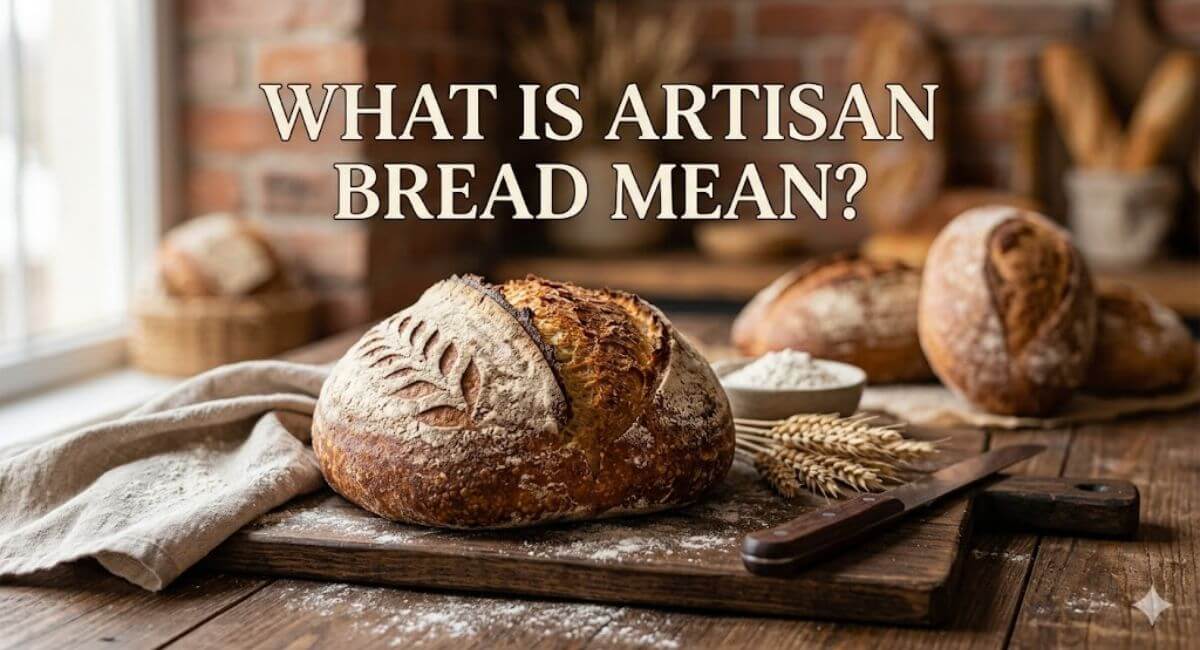

If you have ever walked into an artisan bakery and smelled warm, freshly baked bread, you already know artisan bread feels different. The crackling crust, rich aroma, and airy crumb instantly stand out from ordinary grocery store loaves.
So, what does artisan bread mean exactly?
Artisan bread refers to handcrafted bread made using traditional bread making methods, simple ingredients, and careful fermentation. Unlike factory-produced bread, artisan baking focuses on quality, flavor, texture, and craftsmanship instead of speed and mass production.
Most artisan loaves rely on slow fermentation, hand shaping, and natural baking techniques. Bakers often use only flour water yeast salt to create rustic bread with deep flavor and a chewy texture.
In this guide, you will learn what makes artisan bread special, how it differs from commercial bread, the science behind fermentation, and why so many people prefer naturally leavened bread today.
What Does Artisan Bread Mean?
Simple Definition of Artisan Bread
Artisan bread is bread made by skilled bakers using traditional methods and minimal processing. It is usually handcrafted instead of machine-produced.
The goal of artisan baking is to create bread with better flavor, texture, and appearance through careful dough development and fermentation balance.
Most artisan loaf recipes avoid artificial preservatives, dough conditioners, and unnecessary additives. That is why artisan bread is often called clean label bread.
Why It Is Called “Artisan”
The word “artisan” refers to someone skilled in a craft. An artisan baker uses hands-on techniques and baking experience rather than relying completely on industrial automation.
Bread craftsmanship matters in artisan baking. Every stage, from dough hydration to rustic scoring, affects the final loaf.
Key Characteristics of Artisan Bread
Here are the main qualities of artisan bread:
- Handmade or hand-shaped bread
- Long fermentation times
- Minimal ingredients
- Crusty artisan loaves
- Open crumb structure
- Rich aroma and flavor
- Rustic appearance
- Hearth baked bread texture
These features create bread with personality and depth.
How Artisan Bread Is Different From Commercial Bread
Handmade Bread vs Mass Production
Commercial bread factories focus on speed and consistency. Machines mix, shape, proof, and bake thousands of loaves quickly.
Artisan bread baking takes a slower path.
An artisan baker carefully monitors fermentation, dough texture, and shaping techniques. This process creates better bread textures and flavor complexity.
Ingredients Used in Artisan Baking
Most artisan loaf recipes contain simple ingredients:
- Bread flour
- Water
- Salt
- Yeast or sourdough starter
Commercial bread often includes:
- Dough conditioners
- Preservatives
- Added sugars
- Emulsifiers
- Artificial flavors
The simplicity of artisan loaf ingredients gives the bread a cleaner taste.
Long Fermentation and Flavor Development
One major difference is fermentation times.
Artisan bread usually goes through long fermentation or overnight proofing. This slow process allows yeast activity to develop stronger flavor and aroma.
Commercial bread is often rushed with fast-rising yeast methods.
Texture, Crust, and Crumb Structure
Artisan bread typically has:
- Burnished crust
- Airy crumb
- Open cell structure
- Chewy texture
Commercial bread usually has a soft uniform texture with less character.
The Traditional Methods Behind Artisan Baking
Hand Shaping and Dough Preparation
Traditional bakers often shape dough by hand. This preserves gas bubbles formed during fermentation and helps create alveoli, the holes found in open crumb sourdough loaf styles.
Hand-shaped rustic loaf methods also give every bread a unique appearance.
Natural Fermentation Process
Many artisan bakers prefer naturally leavened bread made with wild yeast from a sourdough starter.
Natural fermentation improves flavor development and can enhance digestibility.
Hearth Baking and Steam Injection Ovens
Traditional hearth-style ovens create radiant heat that produces crispy crusts and excellent oven spring.
Steam injection ovens help develop a crackly crust while maintaining moisture during the first baking stage.
Rustic Scoring Techniques
Scoring means cutting the dough before baking.
Rustic scoring helps control expansion while adding artistic patterns to the loaf surface.
What Is a County Integrated Development Plan and Why It Matters
Main Ingredients Used In Artisan Bread
Flour Water Yeast Salt Formula
Many artisan breads follow a lean bread formulation using only four ingredients:
- Flour
- Water
- Yeast
- Salt
This simple bread formula highlights technique rather than additives.
Bread Flour vs Whole Wheat Flour
Bread flour contains higher protein levels that strengthen gluten structure.
Whole wheat flour adds fiber, nutrients, and deeper flavor. Many artisan bakers combine both for balance.
Freshly milled flour can also improve aroma and taste.
Wild Yeast and Sourdough Starter
A sourdough starter contains natural yeast and beneficial bacteria.
This cultured dough helps create tangy flavor, airy crumb, and slow fermented bread loaf characteristics.
Why Clean Label Bread Matters
Consumers increasingly prefer preservative free bread with recognizable ingredients.
Clean label bakery bread avoids unnecessary chemicals and supports more natural eating habits.
Popular Types of Artisan Bread
Sourdough Bread
Sourdough bread is one of the most recognized artisan breads.
It uses wild fermentation instead of commercial yeast and develops complex flavor through extended proofing.
Baguette
The baguette is famous for its thin crispy crust and light crumb structure.
Traditional French baguettes rely heavily on proper fermentation balance.
Ciabatta
Ciabatta uses high hydration dough to create large irregular holes and a chewy interior.
Its wet dough requires advanced dough handling skills.
Focaccia
Focaccia is an Italian artisan bread known for its olive oil richness and soft texture.
Many bakers top it with herbs, garlic, or vegetables.
Brioche and Enriched Doughs
Brioche uses butter, eggs, and milk, making it an enriched dough rather than lean bread.
It has a soft texture and slightly sweet flavor.
Multigrain and Rye Artisan Loaves
Multigrain bread and rye sandwich loaf styles add hearty flavor and nutritional value through whole grains and seeds.
Understanding Fermentation and Bread Science
What Long Fermentation Does
Long proofed artisan bread develops deeper flavor because yeast slowly breaks down sugars over time.
Slow fermentation also strengthens aroma and improves texture.
Dough Hydration and Open Crumb Structure
High hydration dough contains more water than standard dough.
This creates a hydrated crumb texture and the large open cell structure common in rustic handcrafted bread.
Gluten Breakdown and Gut Health
Natural fermentation partially breaks down gluten and starches.
Some people find naturally fermented artisan loaf products easier to digest compared to fast-risen bread.
How Flavor and Aroma Develop
Fermentation produces organic acids and aromatic compounds.
That is why artisan sourdough bread often tastes richer and more complex.
Why Artisan Bread Tastes Better
Fresh Ingredients and Slow Fermentation
Simple ingredients combined with patient fermentation create layered flavors impossible to achieve in rushed production.
Crusty Artisan Loaves and Airy Crumb
The contrast between crispy crust and chewy interior creates a satisfying eating experience.
Many bread lovers specifically seek open crumb artisan bread for this texture.
Baking Artistry and Bread Craftsmanship
Artisan baking blends science and creativity.
Every loaf reflects the baker’s skill, timing, and understanding of dough preparation.
Is Artisan Bread Healthier?
Fewer Additives and Preservatives
Most artisan bakery products avoid artificial preservatives and chemical additives.
That makes additive free bread appealing to health-conscious consumers.
Naturally Leavened Bread Benefits
Naturally cultured dough may support better digestion because of slower fermentation and gluten breakdown.
Whole Grains and Nutritional Value
Many artisan bakers use whole grains, rye, or multigrain flour for added nutrients and fiber.
How To Make Artisan Bread At Home
Essential Equipment for Beginners
You do not need expensive tools to start bread baking.
Helpful beginner tools include:
- Dutch oven
- Bread flour
- Bench scraper
- Mixing bowl
- Brotform basket
- Kitchen scale
Simple Artisan Bread Baking Guide
Basic artisan bread steps:
- Mix flour water yeast salt
- Rest the dough
- Perform folds during fermentation
- Shape the loaf
- Allow proofing
- Score the dough
- Bake in high heat with steam
The result is homemade crusty bread with rustic character.
Common Mistakes To Avoid
New bakers often:
- Underproof dough
- Use too much flour
- Skip fermentation time
- Handle wet dough incorrectly
- Bake at low temperature
Patience matters in artisan baking.
How To Identify Real Artisan Bread
Signs of Authentic Artisan Bakery Bread
Real artisan bread often has:
- Irregular shape
- Rustic crust
- Open crumb
- Strong aroma
- Handcrafted appearance
What To Avoid When Buying Bread
Be cautious of bread labeled “artisan” that contains many preservatives or artificial ingredients.
Some companies use the term only for marketing.
Reading Bread Labels Correctly
Look for short ingredient lists and signs of natural fermentation.
Simple ingredients usually indicate higher quality.
FAQs
What makes bread artisan?
Artisan bread is made using traditional methods, slow fermentation, simple ingredients, and hands-on baking techniques.
Is sourdough always artisan bread?
Not always. Many sourdough loaves are artisan made, but some commercial versions use shortcuts and additives.
Why is artisan bread expensive?
Artisan bread requires longer fermentation times, skilled labor, and high-quality ingredients, which increases production costs.
Does artisan bread contain preservatives?
Most authentic artisan bread is preservative free and uses minimal ingredients.
What flour is best for artisan bread?
Bread flour works best for strong gluten structure, though many bakers combine whole wheat flour or rye flour for flavor.
Can beginners make artisan bread at home?
Yes. Beginners can make artisan bread with basic equipment and patience. Starting with a simple lean dough recipe is often easiest.
Conclusion
Artisan bread represents more than just food. It reflects tradition, patience, and true baking artistry. From slow fermentation to hand-shaped rustic loaf techniques, every detail contributes to flavor and texture that commercial bread rarely matches.
Whether you enjoy sourdough bread, ciabatta, focaccia, or multigrain artisan loaf varieties, artisan baking offers a richer and more natural bread experience. With simple ingredients and traditional craftsmanship, artisan bread continues to grow in popularity among people who value quality, flavor, and authentic baking methods.