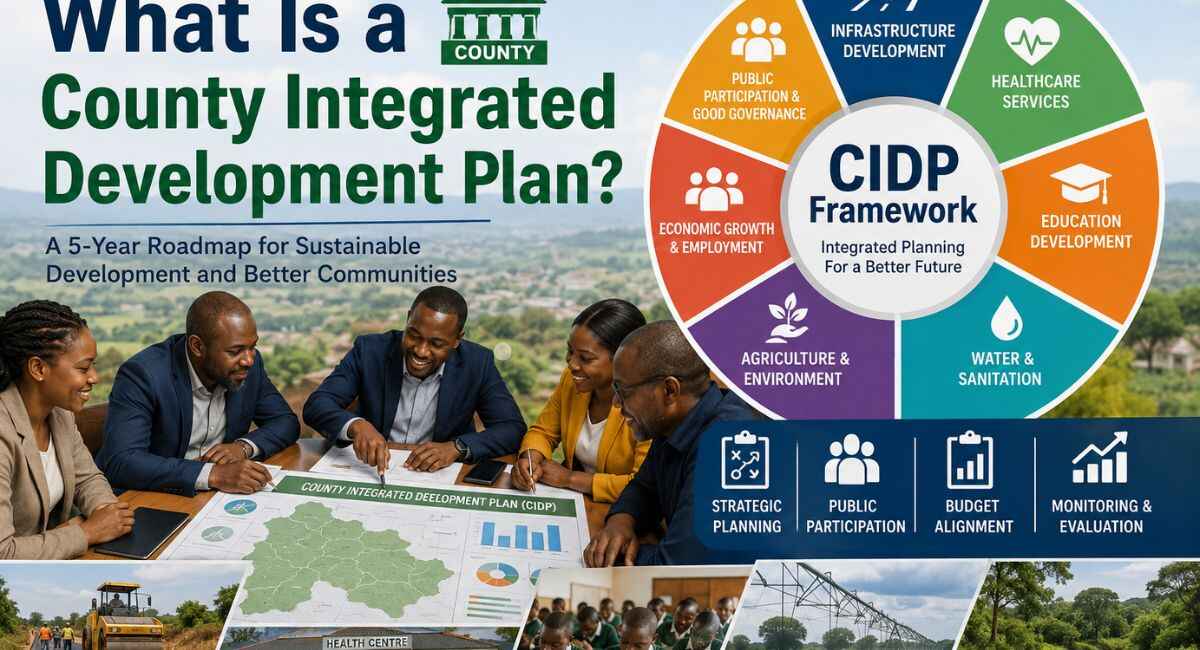

A County Integrated Development Plan (CIDP) is a strategic planning document used by county governments to guide development projects, budgeting, and policy implementation over a five-year period. It acts as a roadmap that outlines how local governments will improve infrastructure, healthcare, education, agriculture, public services, and economic growth within their regions.
In many devolved government systems, counties are responsible for managing local resources and delivering essential services. Without a clear development planning framework, counties often struggle with poor coordination, weak budgeting, and unplanned growth. That is why the county planning process plays such an important role in modern governance.
A CIDP connects development priorities with financial planning, public participation, and long-term policy goals. It also creates accountability by ensuring citizens, county assemblies, businesses, and civil society organizations can monitor how public funds are used. Simply put, the plan helps counties move from reactive decision-making to organized and evidence-based development planning.
What Is a County Integrated Development Plan?
Definition of CIDP
A County Integrated Development Plan is a five-year strategic document prepared by county governments to identify development priorities, allocate resources, and coordinate public projects. It combines economic, social, environmental, and infrastructure planning into one integrated framework.
The plan aligns county development goals with national policies, local needs, and available financial resources. In many countries with devolved governance systems, the CIDP serves as the foundation for county planning and budgeting systems.
Purpose of an Integrated Development Plan
The main purpose of a CIDP is to ensure counties follow a structured and coordinated approach to development. Instead of departments working independently, the integrated plan allows sectors to collaborate toward shared goals.
A county strategic development framework helps local governments:
- Identify urgent community needs
- Prioritize development projects
- Allocate budgets effectively
- Improve service delivery
- Promote transparency in governance
- Support sustainable economic growth
The plan also strengthens public sector planning frameworks by ensuring development projects are based on data, feasibility assessments, and citizen priorities.
Why CIDPs Are Important
An effective CIDP improves how counties manage public resources and deliver services. It reduces duplication of projects and ensures funds go toward high-priority programs.
For example, if a county identifies poor road networks as a major challenge during situational analysis, infrastructure development planning becomes a top budget priority. That alignment between planning and funding increases efficiency.
CIDPs also promote accountability. Citizens can track promised projects and evaluate whether county governments meet their development targets.
Understanding the County Planning Process
Situational Analysis and Baseline Data Collection
Every county integrated development plan begins with a situational analysis. This stage examines the county’s current social, economic, environmental, and infrastructure conditions.
Counties collect baseline data such as:
- Population trends
- Poverty levels
- Access to healthcare
- School enrollment
- Water coverage
- Road conditions
- Employment rates
This evidence-based planning approach helps counties identify gaps and set realistic development priorities.
Public Participation in County Planning
Public participation in county planning is one of the most important stages of the process. Counties organize public participation forums where citizens, businesses, youth groups, women organizations, and development partners share their concerns and ideas.
Community participation in governance helps county officials understand local challenges directly from residents. It also strengthens transparency and trust between governments and citizens.
A strong citizen engagement framework may include:
- Town hall meetings
- Public consultation sessions
- Online feedback systems
- Stakeholder workshops
- Civic education programs
Participatory decision making ensures development plans reflect actual community needs rather than political interests alone.
Drafting the County Integrated Development Plan
After collecting data and public feedback, technical teams begin drafting the CIDP. Administrative planning units and county executive committee members coordinate this process.
The draft usually includes:
- Development priorities
- Sector goals
- Budget estimates
- Resource allocation models
- Implementation frameworks
- Monitoring and evaluation systems
At this stage, counties also conduct feasibility assessments to ensure proposed projects are realistic and financially sustainable.
County Assembly Approval Process
Before implementation, the CIDP must go through the county assembly approval process. County assemblies review the document to ensure it complies with legal and policy requirements.
The assembly may recommend revisions before approving the final version. Once approved, the CIDP becomes the official county policy planning document guiding development for five years.
Legal and Governance Framework Behind CIDPs
Role of the Public Finance Management Act
The Public Finance Management Act provides the legal framework for county planning and budgeting systems. It requires counties to prepare integrated development plans before allocating public funds.
This law ensures development budget planning follows clear financial planning frameworks and accountability standards.
County Government Structure in Planning
Several institutions participate in county development planning.
County Executive Committee
The executive committee prepares and implements the CIDP. It coordinates county departments and manages project execution.
County Assembly
The county assembly reviews, debates, and approves development plans and budgets.
County Budget and Economic Forum
This body promotes stakeholder engagement between county governments, businesses, civil society organizations, and citizens.
Together, these institutions create a governance and accountability system that supports better development outcomes.
Governance and Accountability Systems
CIDPs improve transparency because citizens can monitor project implementation and budget spending. Counties are expected to publish reports, conduct audits, and provide updates on project performance.
Monitoring systems reduce misuse of public resources while encouraging responsible leadership.
How County Planning and Budgeting Work Together
County Budget Alignment Process
A county budget should reflect the priorities identified in the CIDP. This process is called budget alignment.
For example, if healthcare service planning is prioritized in the CIDP, county budgets should allocate sufficient funds toward hospitals, staffing, and medical equipment.
Without alignment, development plans become ineffective documents with little practical impact.
Annual Development Plan and Fiscal Strategy Papers
The Annual Development Plan (ADP) translates long-term CIDP goals into yearly activities and projects.
Meanwhile, the County Fiscal Strategy Paper outlines how the county intends to raise and spend funds. These documents work together to ensure financial discipline and project continuity.
Resource Mobilization Strategy
County governments rely on several funding sources to implement development plans.
These may include:
- National government transfers
- Local revenue collection
- Donor funding
- Grants
- Public-private partnerships
A strong resource mobilization strategy increases a county’s ability to finance long-term projects.
Key Development Sectors Included in a CIDP
Infrastructure Development Planning
Infrastructure is often one of the largest sections within a county integrated development plan.
Counties may focus on:
- Road construction
- Transport networks
- Street lighting
- Urban development strategies
- Market facilities
Improved infrastructure supports trade, mobility, and economic growth initiatives.
Healthcare Service Planning
Healthcare service planning addresses medical access and public health challenges.
Common priorities include:
- Building health centers
- Expanding hospitals
- Recruiting healthcare workers
- Improving maternal healthcare
- Disease prevention programs
Better healthcare systems improve quality of life and productivity.
Education Sector Development
Education planning focuses on improving learning opportunities and workforce development.
Counties may invest in:
- Early childhood education
- Vocational training centers
- Digital learning programs
- Scholarship initiatives
- Youth empowerment projects
Education sector development supports long-term economic transformation.
Water, Agriculture, and Environmental Sustainability
Many counties prioritize water and sanitation systems because they directly affect public health and agriculture.
CIDPs also support:
- Agriculture development programs
- Irrigation systems
- Climate adaptation projects
- Environmental sustainability planning
- Waste management systems
Environmental protection initiatives help counties balance growth with sustainability.
Public Participation and Citizen Engagement in CIDPs
Why Community Participation Matters
Citizen involvement improves project ownership and accountability. Communities are more likely to support development programs when they participate in planning decisions.
Public participation also helps counties identify vulnerable groups that may otherwise be excluded from development opportunities.
Role of Civil Society Organizations and Stakeholders
Civil society organizations often provide civic education, policy oversight, and technical support during planning processes.
Businesses and investors also contribute ideas that support economic development programs and job creation strategies.
Strong stakeholder engagement creates more inclusive and practical development plans.
Challenges in Public Consultation Processes
Despite its importance, public consultation sometimes faces several obstacles:
- Low public awareness
- Limited funding
- Political interference
- Weak communication channels
- Poor attendance at forums
Counties must strengthen civic education strategies to improve participation rates.
Monitoring, Evaluation, and Implementation Framework
Project Lifecycle Management
Once approved, counties begin implementing development projects in phases. Each project follows a structured lifecycle that includes planning, execution, monitoring, and review.
Project lifecycle management improves coordination and reduces delays.
Monitoring and Evaluation (M&E)
Monitoring and evaluation systems help counties track progress and measure performance.
Key tools include:
- Performance indicators
- Development indicators
- Progress reports
- Financial audits
- Performance tracking systems
M&E ensures counties remain accountable for project outcomes.
Measuring County Development Outcomes
Successful county development planning can lead to:
- Economic growth
- Reduced poverty
- Better infrastructure
- Improved healthcare access
- Increased employment opportunities
- Enhanced public services
Long-term strategic planning creates stronger and more resilient local economies.
Common Challenges Facing County Integrated Development Plans
Budget Constraints
Limited financial resources often slow project implementation. Counties sometimes struggle to fund all proposed projects.
Political Interference
Political interests may influence project prioritization, reducing focus on community needs.
Weak Data Collection Systems
Poor baseline data can lead to unrealistic planning and ineffective resource allocation.
Poor Coordination Between Departments
Lack of collaboration between departments may result in duplicated projects or implementation delays.
Benefits of Effective County Development Planning
Better Infrastructure and Services
Organized planning improves roads, healthcare facilities, schools, and public utilities.
Improved Government Accountability
CIDPs strengthen transparency because citizens can monitor budgets and development projects.
Sustainable Economic Growth
Strategic planning supports investment, business growth, and employment creation.
Long-Term County Transformation
Counties that follow integrated planning frameworks are more likely to achieve sustainable development and social progress.
Frequently Asked Questions
What is the main purpose of a County Integrated Development Plan?
The main purpose of a CIDP is to guide county governments in planning, budgeting, and implementing development projects over a five-year period.
Who prepares a County Integrated Development Plan?
The county executive committee, planning departments, technical experts, and stakeholders prepare the CIDP with input from citizens and civil society organizations.
How long does a CIDP last?
Most County Integrated Development Plans cover a five-year development cycle.
What is the difference between a CIDP and an Annual Development Plan?
A CIDP provides long-term strategic goals, while an Annual Development Plan focuses on projects and activities for a single financial year.
Why is public participation important in county planning?
Public participation ensures development priorities reflect community needs and improves transparency in governance.
How does a CIDP support economic development?
A CIDP promotes economic growth by coordinating investments in infrastructure, education, healthcare, agriculture, and business development programs.
Final Thoughts
A County Integrated Development Plan is far more than a government document. It is a strategic roadmap that shapes how counties grow, allocate resources, and improve public services. Through integrated planning, counties can align development priorities with budgets, legal frameworks, and community needs.
When supported by strong public participation, transparent governance, and effective monitoring systems, a CIDP becomes a powerful tool for sustainable development and long-term economic transformation. Counties that plan effectively today create stronger communities and better opportunities for future generations.