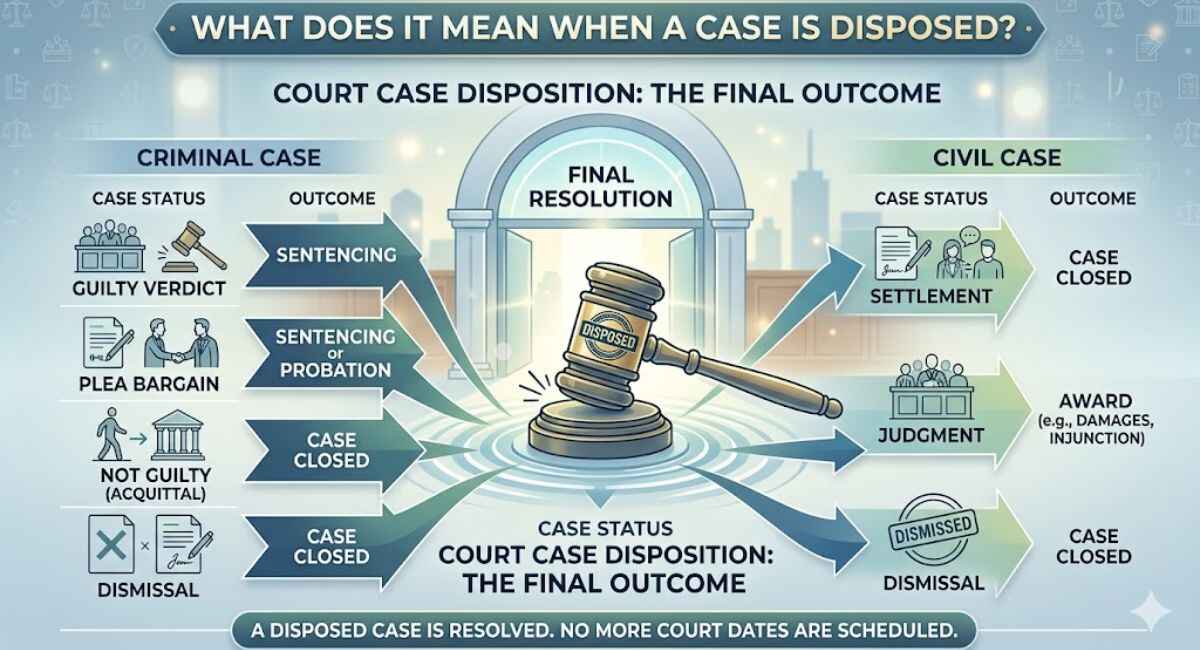

Seeing the words “case disposed” on a court docket can feel confusing, especially if you are unfamiliar with legal terminology. Many people assume it automatically means someone was found guilty or sent to jail. In reality, that is not always true.
In the legal system, a disposed case simply means the court has reached a resolution and the legal proceedings have concluded in some way. That resolution could involve a dismissal, plea agreement, acquittal, conviction, settlement agreement, or another judicial decision.
Whether you are dealing with criminal charges, family court proceedings, or civil litigation, understanding the meaning of a disposed case can help you better understand your legal status and next steps.
What Does It Mean When a Case Is Disposed?
A disposed case means the court has finished handling the matter and entered a final action or judgment. In other words, the active charges or claims have been resolved.
When a court record says “case status disposed,” it usually means the matter is no longer active on the court docket.
That does not necessarily mean the defendant lost the case. A case can be disposed in several ways, including:
- Case dismissed
- Guilty plea
- Not guilty verdict
- Plea bargain
- Settlement approved by court
- Administrative case closure
- Final judgment entered
For example, if a prosecutor withdraws charges because of lack of evidence, the court may still mark the case as disposed.
Difference Between Disposed, Dismissed, and Closed Cases
These legal terms often confuse people because they sound similar.
| Term | Meaning |
| Disposed | The case has reached a legal resolution |
| Dismissed | The court terminated the case without a conviction |
| Closed | Administrative term showing no further court activity |
A dismissed case is one type of disposition, but not every disposed case is dismissed.
Understanding Case Disposition in the Legal System
A legal case disposition refers to the final outcome of a court proceeding. Courts use this terminology to update their records and track completed matters.
The disposition process usually follows several steps:
- Arrest or filing of claims
- Court hearings
- Trial proceedings or plea negotiations
- Judicial ruling or settlement
- Final disposition entered into court records
The disposition date is the official date when the case outcome becomes final.
In criminal prosecution matters, the disposition may determine sentencing, probation conditions, or incarceration. In family law cases, the disposition may involve custody arrangements, child support orders, or property division.
Types of Court Case Dispositions
Case Dismissed
A case dismissal occurs when the court ends the case without finding the defendant guilty.
This can happen because of:
- Lack of evidence
- Procedural errors
- Prosecutorial misconduct
- Constitutional rights violations
- Witness credibility issues
Dismissed With Prejudice vs Dismissed Without Prejudice
This distinction matters a lot.
| Type of Dismissal | Meaning |
| Dismissed with prejudice | Charges cannot be filed again |
| Dismissed without prejudice | Prosecutor may refile charges later |
For example, a judge may dismiss criminal charges without prejudice if prosecutors need additional evidence.
Guilty Verdict and Conviction
A disposed case may end with a guilty verdict after trial or a guilty plea during plea negotiations.
This often leads to:
- Sentencing
- Probation program
- Fines and fees
- Restitution
- Supervised release
- Incarceration
A felony conviction can remain on criminal records for years unless expungement becomes available.
Not Guilty Verdict and Acquittal
When a defendant is acquitted, the court determines prosecutors failed to prove guilt beyond a reasonable doubt.
This outcome protects the defendant from double jeopardy, meaning they generally cannot be tried again for the same offense.
An acquittal is still considered a final disposition.
Plea Bargain and Plea Agreement
Many criminal cases end through plea bargains instead of trials.
A defendant may agree to:
- Plead guilty
- Enter a no contest plea
- Accept misdemeanor reduction
- Participate in rehabilitation programs
In exchange, prosecutors may reduce charges or recommend lighter sentencing.
For example, a DUI case disposition might involve a reckless driving plea and supervised probation instead of harsher penalties.
Diversion Program and Community Service
Some courts allow first-time offenders to complete a diversion program.
Requirements may include:
- Community service
- Drug treatment program
- Counseling
- Probation conditions
Once completed successfully, charges may be dismissed.
Administrative Case Closure
An administrative case closure occurs when the court temporarily removes a case from the active docket.
This does not always mean the legal matter is permanently over.
What Is a County Integrated Development Plan and Why It Matters
What Happens After a Criminal Case Is Disposed?
Once criminal charges conclude, several legal consequences may follow.
Sentencing and Probation Conditions
If convicted, the defendant may face:
- Jail or prison
- Supervised probation
- Court-ordered obligations
- Probation violation monitoring
The judge determines penalties based on jurisdiction, criminal history, and offense severity.
Fines, Restitution, and Supervised Probation
Courts frequently order financial penalties after disposition.
These can include:
- Victim restitution
- Court costs
- Fines and fees
- Mandatory supervision
Failure to comply can trigger enforcement actions or contempt proceedings.
Criminal Record and Background Checks
A disposed criminal case may still appear during background checks.
Even dismissed charges can sometimes remain visible in public records unless sealed or expunged.
Employers, landlords, and licensing agencies may review court records during screenings.
Expungement After Disposition
Expungement removes eligible criminal records from public access.
Eligibility depends on factors like:
- Type of offense
- Sentence served
- Time elapsed
- State law
Some jurisdictions allow felony reduction to misdemeanor status before expungement.
Sealed Criminal Records and Felony Expungement
Sealing records limits public access while allowing certain government agencies to view them.
Felony expungement rules vary widely between states like Ohio and Arizona.
Because laws differ by jurisdiction, consulting legal counsel is often necessary.
What Does “Disposed” Mean in Family Court Cases?
The term “disposed” also appears in family court proceedings.
In these cases, it means the judge issued a final order resolving the dispute.
Divorce Case Disposition
A divorce case disposition may involve:
- Final decree of divorce
- Property division
- Spousal support
- Parenting time arrangements
Once entered, the marriage legally ends.
Child Custody Dispute Outcomes
Family court may dispose of custody cases by approving:
- Parenting plans
- Custody agreements
- Support modification requests
- Court order enforcement terms
The court’s priority remains the child’s best interests.
Parenting Plans and Support Obligations
Judges often establish detailed parenting plans covering:
- Visitation schedules
- School decisions
- Medical care
- Child support obligations
Failure to comply may result in enforcement motions or contempt proceedings.
Final Decree of Divorce and Property Division
The final judgment typically addresses:
- Division of assets
- Debt allocation
- Support enforcement
- Court compliance obligations
Once signed, the disposition becomes legally binding.
Custody Modification and Continuing Jurisdiction
Even after disposition, family courts may retain continuing jurisdiction over custody matters.
That means parents can request:
- Modification of custody orders
- Relocation approvals
- Parenting dispute resolutions
Family law cases often evolve over time.
Can a Disposed Case Be Reopened?
In certain situations, yes.
Disposed cases are usually final, but courts sometimes reopen them under limited circumstances.
Reopening Criminal Cases With New Evidence
Newly discovered evidence may justify reopening a case.
Examples include:
- DNA evidence
- Exculpatory evidence
- Witness recantations
Courts review whether the evidence could significantly affect the outcome.
DNA Evidence and Procedural Errors
Serious procedural errors can also lead to reconsideration.
Examples include:
- Due process violations
- Prosecutorial misconduct
- Improper jury instructions
- Ineffective legal representation
Appeals Process and Appeals Deadline
Defendants may challenge convictions through criminal appeals.
However, strict appeals deadlines apply.
Appeals courts review whether legal mistakes occurred during trial proceedings.
Modification Requests in Family Court
Family law matters may reopen when circumstances change.
Parents may seek:
- Support modification
- Custody adjustments
- Enforcement actions
- Parenting time revisions
Common Reasons a Case Gets Disposed
Courts dispose of cases every day for many reasons.
Lack of Evidence
Prosecutors may dismiss charges when evidence becomes weak or unreliable.
Withdrawal of Charges
A prosecutor can voluntarily end criminal prosecution before trial.
Settlement Agreement Approved by Court
Civil and family disputes often end through negotiated settlements.
Plea Negotiations Between Prosecutor and Defendant
Many criminal defendants resolve cases through plea agreements instead of lengthy trials.
Court-Issued Judgment After Trial Proceedings
Sometimes the judge or jury reaches a final verdict after hearing all evidence.
How to Check the Status of a Disposed Case
Most courts provide online access to court administration systems.
You can usually search by:
- Defendant name
- Court docket number
- Disposition date
Court records often include:
- Charges
- Hearing dates
- Judicial rulings
- Final disposition information
Understanding legal jargon explained in court databases can be difficult, so legal representation may help interpret records correctly.
Why Legal Representation Matters in Disposed Cases
A criminal defense attorney can explain how a disposition affects your future.
This includes:
- Criminal penalties
- Expungement eligibility
- Appeals rights
- Background checks
- Probation conditions
A strong defense strategy may reduce charges, negotiate plea bargains, or secure dismissals.
Legal counsel also helps protect constitutional rights throughout the judicial process.
Frequently Asked Questions
Does disposed mean guilty?
No. A disposed case only means the court reached a conclusion. The outcome could involve dismissal, acquittal, plea agreement, or conviction.
Is a disposed case over permanently?
Usually yes, but certain cases can reopen because of appeals, DNA evidence, procedural errors, or custody modifications.
Can a disposed case affect employment?
Yes. Criminal records and background checks may still show disposed charges depending on state law and record sealing rules.
What does being disposed of by a prosecutor mean?
It generally means the prosecutor resolved or dismissed the case before further court proceedings continued.
How long does a disposed case stay on your record?
That depends on state laws, offense severity, and expungement eligibility. Some records remain permanent unless sealed.
Can charges return after dismissal?
Charges dismissed without prejudice can sometimes be refiled later.
Conclusion
Understanding what it means when a case is disposed can remove a lot of confusion about court records and legal status updates. In simple terms, disposition means the court resolved the case, but the outcome itself can vary widely. A case may end in dismissal, acquittal, conviction, settlement, or another legal resolution.
Because every jurisdiction handles legal proceedings differently, reviewing court documents carefully is important. If you are unsure how a disposition affects your criminal record, custody rights, or future obligations, speaking with an experienced attorney is often the safest next step.