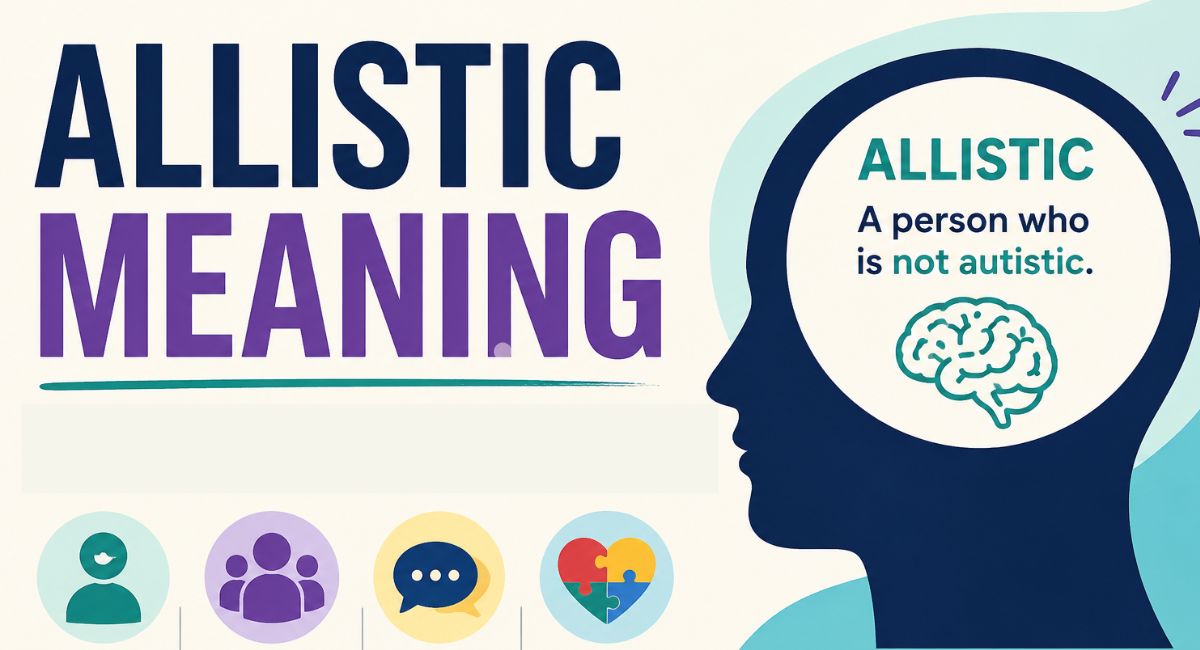

If you have spent time in the Neurodiversity community, you have probably seen the word “allistic” appear in discussions about autism, ADHD, and neurodivergence. Many people wonder about the allistic meaning, how it relates to autism, and whether it means the same thing as “neurotypical.”
The short answer is simple. An allistic person is someone who is not autistic. However, the term has more nuance than most people realize. A person can be allistic while still being neurodivergent because conditions like Attention Deficit Hyperactivity Disorder, Obsessive Compulsive Disorder, dyslexia, or PTSD also fall under neurodivergence.
Understanding modern autism terminology helps create respectful conversations and better inclusion. In this guide, you will learn what allistic means, how it differs from neurotypicals, and why the autistic community uses the term today.
What Does Allistic Mean?
The term “allistic” refers to a person who is not autistic. It is commonly used within the Autistic Self Advocacy Network and broader neurodiverse community to describe non-autistic individuals without framing autism as the “default.”
In simple terms:
- Autistic person = someone on the autism spectrum
- Allistic person = someone who is not on the autism spectrum
The word is especially useful because it avoids defining autistic people as “abnormal” or “other.”
Allistic Definition in Simple Words
An allistic person does not have Autism Spectrum Disorder. Their communication style, sensory processing, and social behaviors generally do not match autistic traits.
That does not automatically mean they are neurotypical. This is where many people get confused.
For example:
- A person with ADHD may be allistic because they are not autistic
- However, they are still neurodivergent because ADHD is a neurodevelopmental difference
Origin of the Term Allistic
The word comes from the Greek prefix “allo,” meaning “other.” It emerged from autism advocacy and neurodiversity discussions as a neutral alternative to phrases like “normal people.”
Today, the term appears frequently in autism education, autistic communication discussions, and inclusive language guides.
Why the Autism Community Uses the Word
Many autistic adults prefer balanced terminology. Instead of labeling autistic people as different from “normal” people, terms like autistic and allistic place both groups on equal footing.
This shift supports the broader Neurodiversity movement, which views neurological differences as natural human variation rather than flaws needing correction.
What Is an Allistic Person?
An allistic person is simply someone who is not autistic. They may be neurotypical, or they may have another neurodivergent condition.
Examples of Allistic People
Here are a few examples:
| Person | Autistic? | Neurodivergent? | Allistic? |
| Person with no neurological conditions | No | No | Yes |
| Person with ADHD | No | Yes | Yes |
| Person with dyslexia | No | Yes | Yes |
| Autistic adult | Yes | Yes | No |
This distinction helps explain why “allistic vs neurotypical” is not the same comparison.
Can Someone Be Allistic and Neurodivergent?
Yes. This is one of the most misunderstood parts of neurodivergent terminology.
A person can be:
- Allistic
- Neurodivergent
- Both at the same time
Conditions often associated with neurodivergence include:
- ADHD
- Dyslexia
- Dyspraxia
- PTSD
- Bipolar disorder
- Sensory processing disorder
Someone with any of these conditions may still be allistic if they are not autistic.
Are ADHD People Allistic?
Many people ask this question because ADHD and autism overlap in several ways.
Attention Deficit Hyperactivity Disorder can involve:
- Executive dysfunction
- Sensory differences
- Emotional regulation challenges
- Social difficulties
However, ADHD alone does not make someone autistic. A person with ADHD but without autism is considered allistic and neurodivergent.
Allistic vs Autistic
The biggest difference between autistic and allistic individuals relates to neurological processing.
Key Differences in Communication and Sensory Experiences
Autistic people may experience:
- Sensory overload
- Different communication styles
- Strong routines
- Deep focus on interests
- Difficulty interpreting social cues
Allistic individuals generally process social interaction and sensory input differently.
That said, every autistic experience is unique. Autism exists on a spectrum, which means traits vary greatly among individuals.
Social Interaction Differences
Some autistic people communicate more directly than allistic individuals. Others may struggle with eye contact, small talk, or interpreting facial expressions.
Meanwhile, allistic communication often relies heavily on:
- Implied meanings
- Tone changes
- Social conventions
- Nonverbal cues
Neither style is inherently better. They are simply different communication systems.
Common Misconceptions
One harmful misconception is that autistic people lack empathy. Research and lived experiences from autistic adults strongly challenge this stereotype.
Another misconception is that allistic people cannot experience emotional overwhelm. While autistic meltdowns are linked to neurological overload, allistic individuals can also become emotionally overwhelmed under stress.
Allistic vs Neurotypical
This comparison causes the most confusion online.
Is Allistic the Same as Neurotypical?
No. The terms overlap, but they are not identical.
- Allistic means non-autistic
- Neurotypical means not neurodivergent
A neurotypical person is usually allistic. However, not all allistic people are neurotypical.
Neurotypical vs Neurodivergent Explained
The term neurodivergent describes people whose brains function differently from dominant societal expectations.
This may include:
- Autism
- ADHD
- Dyslexia
- OCD
- PTSD
- Dyspraxia
Meanwhile, neurotypical refers to people whose neurological development follows commonly expected patterns.
Examples of Allistic but Neurodivergent People
Someone may be:
- Allistic with ADHD
- Allistic with dyslexia
- Allistic with PTSD
- Allistic with sensory processing disorder
These examples show why precise autism terminology matters in respectful communication.
Understanding Neurodiversity and Autism Terminology
Modern autism vocabulary has evolved significantly over the last decade.
Neurodivergent Meaning
The term neurodivergent describes people with neurological differences that affect thinking, learning, communication, or behavior.
It is not a medical diagnosis. Instead, it is a broader social and community term.
Autism Spectrum Disorder Explained
Autism Spectrum Disorder is a neurodevelopmental condition involving differences in:
- Communication
- Sensory processing
- Social interaction
- Behavioral patterns
Autism can appear differently in children, women, men, and autistic adults with high masking autism.
Identity-First Language vs Person-First Language
Some people prefer:
- “Autistic person” which is identity-first language
Others prefer:
- “Person with autism” which is person-first language
Many autistic advocates favor identity-first language because they see autism as part of identity rather than a separate condition.
Still, preferences vary. Respecting individual choices matters most.
Inclusive Communication in the Autistic Community
Inclusive language avoids harmful stereotypes and outdated terms.
For example:
- “Support needs” is often preferred over “high functioning”
- “Autism acceptance” is often preferred over “autism awareness”
These changes reflect growing understanding within autism advocacy.
Common Autism Community Terms Explained
Neurodiverse
“Neurodiverse” describes a group containing people with different neurological profiles.
For example, a classroom with autistic, ADHD, dyslexic, and neurotypical students is neurodiverse.
High Masking Autism
High masking autism refers to autistic individuals who hide autistic traits to fit social expectations.
Masking may involve:
- Copying social behaviors
- Suppressing stimming
- Forcing eye contact
- Rehearsing conversations
Long-term masking can contribute to autistic burnout.
Autistic Burnout
Autistic burnout involves extreme mental, emotional, and physical exhaustion caused by prolonged stress and masking.
Symptoms may include:
- Reduced functioning
- Sensory sensitivity
- Emotional exhaustion
- Difficulty communicating
Sensory Overload and Meltdowns
Many autistic people experience sensory overload from sounds, lights, textures, or crowded environments.
This overload can sometimes lead to autistic meltdowns, which differ from tantrums because they are involuntary neurological responses.
Why Language Matters in Autism Discussions
Respectful Terminology
Language shapes how society views disability and neurological differences.
Terms like:
- allistic
- neurodivergent
- autistic identity
- inclusive communication
help create more respectful conversations.
Autism Acceptance vs Autism Awareness
Awareness focuses on recognizing autism exists.
Acceptance goes further by supporting accommodations, accessibility, and inclusion.
Many autism advocates now emphasize acceptance because it centers autistic experiences and dignity.
How Language Affects Inclusion
Inclusive language can:
- Reduce stigma
- Improve understanding
- Encourage accessibility
- Support autistic adults and children
- Create safer social environments
Small wording changes often make a significant difference.
FAQs
What does allistic mean in autism?
Allistic means a person is not autistic. The term is commonly used within neurodiversity and autism community discussions.
Is allistic the same as neurotypical?
No. A neurotypical person is not neurodivergent, while an allistic person is simply non-autistic. Someone with ADHD can be allistic but still neurodivergent.
Can you be allistic and neurodivergent?
Yes. Conditions like ADHD, dyslexia, PTSD, and OCD can make someone neurodivergent even if they are not autistic.
Are people with ADHD allistic?
People with ADHD are usually considered allistic unless they are also autistic.
Can allistic people have meltdowns?
Allistic people can experience emotional overwhelm, but autistic meltdowns are specifically linked to neurological overload associated with autism.
What is the opposite of autistic?
In many neurodiversity discussions, the opposite term commonly used is “allistic.”
Final Thoughts
Understanding the allistic meaning helps create clearer and more respectful conversations around autism, neurodivergence, and inclusion. The term gives people a neutral way to describe non-autistic individuals without treating autism as abnormal or lesser.
As conversations about neurodiversity continue evolving, language will keep changing too. Learning terms like allistic, neurotypical, neurodivergent, and autistic identity helps build empathy and stronger communication within the broader autism community.