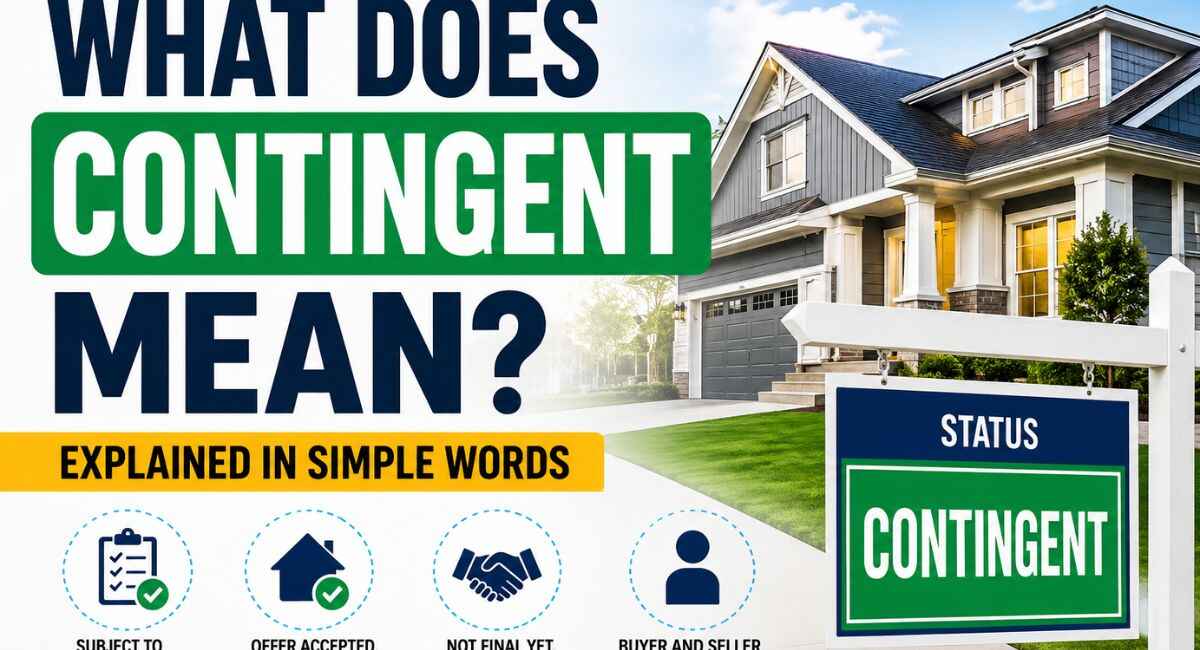

If you are searching for the meaning of “contingent” in real estate, you are not alone. Many buyers and sellers see this word on property listings and feel confused about what it actually means.
In simple words, a contingent home is a house where the seller has accepted an offer, but the deal is not fully complete yet. Certain conditions still need to be met before the sale can move forward. These conditions may include a home inspection, loan approval, appraisal, or the buyer selling their current home first.
Understanding contingent status can help you avoid confusion during the home buying process and make smarter real estate decisions. In this guide, you will learn what contingent means, the different types of contingencies, and how they affect both buyers and sellers.
What Does Contingent Mean in Real Estate?
The word “contingent” simply means conditional. When a property is listed as contingent in real estate, it means the seller has accepted an offer from a buyer but that deal isn’t locked in yet. It hinges on one or more specific conditions being met before the transaction can officially close.
Think of it as an agreement that says: “We have a deal, as long as…”
Those “as long as” conditions are called contingencies. They exist to protect both parties. A buyer, for example, doesn’t want to be forced into purchasing a house that has serious structural damage or a mortgage that the lender won’t actually approve. A seller, meanwhile, wants some assurance that the deal will actually close.
Until every contingency is satisfied or formally removed the property remains in contingent status on the MLS (Multiple Listing Service). That’s why you can still see contingent homes on Zillow, Realtor.com, and other platforms.
How Does Contingent Status Work?
Once a buyer submits an offer and the seller accepts it, both parties enter what’s known as the contingency period. During this window, the buyer works through a checklist of conditions that must be resolved.
Here’s what typically happens:
The buyer’s real estate agent and the seller’s agent coordinate the next steps. The buyer usually pays an earnest money deposit into an escrow account to show good faith. Then inspections get scheduled, mortgage approvals get processed, and appraisals get ordered all within a specific timeframe spelled out in the purchase agreement.
If everything checks out, the contingencies are removed and the property moves toward closing. If something goes wrong, say the inspection reveals a crumbling foundation or the appraisal comes in way below the agreed purchase price the buyer may have the right to back out and recover their earnest money.
That contingency protection is a big deal. It’s essentially the buyer’s legal safety net.
Common Types of Real Estate Contingencies
Not every contingent deal looks the same. The specific conditions attached to a contract depend on what the buyer and seller agreed to. These are the most common types you’ll come across.
Home Inspection Contingency
This one is perhaps the most familiar. Before the deal closes, the buyer has the right to hire a licensed inspector to evaluate the property from top to bottom. The inspector checks the roof, foundation, electrical systems, plumbing, HVAC, and more.
If the home inspection report reveals significant problems, the buyer can request repairs, ask for a price reduction, or walk away entirely. Without this contingency, you’d be buying blind.
Financing Contingency (Mortgage Contingency)
A financing contingency, also called a mortgage contingency, protects the buyer if they can’t secure a home loan. Even if you’ve been pre-approved, lenders can deny final mortgage approval for various reasons: changes in your credit score, job loss, or shifts in the property’s assessed value.
If financing falls through and a mortgage contingency is in place, the buyer can exit the contract without losing their deposit. Without it, they could be on the hook for a large sum of money even if the bank says no.
Appraisal Contingency
When a lender funds a mortgage, they want to make sure the property is actually worth what the buyer agreed to pay. They send an independent appraiser to determine market value.
If the appraisal value comes in lower than the sale price, a lender typically won’t fund the full loan amount. An appraisal contingency allows the buyer to renegotiate the price, cover the appraisal gap out of pocket, or exit the deal. If the buyer has no appraisal contingency, they’re stuck bridging that gap themselves.
Title Contingency
A title contingency gives the buyer the right to review a title search before closing. A title search digs into public records to confirm the seller actually owns the property and that there are no outstanding liens, legal disputes, or property ownership issues attached to it.
If the title search turns up a problem like an unpaid tax lien from a previous owner the buyer can demand it be resolved before proceeding. Title insurance is typically purchased to protect both parties going forward.
Home Sale Contingency
This type of contingency comes into play when a buyer needs to sell their current home before they can afford to purchase a new one. It’s common but it can make sellers nervous, because it adds another layer of uncertainty to the deal.
Some sellers counter this with a kick-out clause (more on that in a moment), which lets them keep marketing the home and potentially accept a cleaner offer while the first buyer tries to sell their existing property.
Contingent vs. Pending: What’s the Difference?
This is one of the most searched questions in real estate, and honestly, it’s easy to confuse the two.
Contingent means a seller has accepted an offer, but there are still active conditions that need to be satisfied. The deal can still fall apart, and in many cases, the seller continues to accept backup offers.
Pending means all contingencies have been removed or resolved, and the transaction is moving toward closing. The deal is much more locked in at this point. Most pending sales do close, barring something unusual.
A simple way to think about it: contingent is “almost under contract,” and pending is “basically sold.” If you’re a buyer looking for a real shot at a property, contingent listings are worth watching. Pending ones, less so.
What Does Contingent Continue to Show Mean?
You might see listings labeled “contingent continue to show” or “contingent CCS.” This specific designation tells buyer’s agents that even though the property is under a contingent contract, the seller is still accepting showing requests and backup offers.
Why would a seller do this? Because they’re not entirely confident the current deal will close. Maybe the buyer’s financing feels shaky. Maybe the home inspection raised red flags. Whatever the reason, the seller wants to keep their options open.
If you’re a buyer and you see this label, it’s worth reaching out. A backup offer in this situation is a legitimate strategy.
What Does Contingent No Show Mean?
On the flip side, “contingent no show” means the seller is not accepting additional showings or backup offers. They feel good about the current buyer and the transaction in progress, so they’ve chosen not to entertain alternatives until and unless something changes.
These deals still fall through occasionally, but they’re less likely to open back up for other buyers.
Understanding the Kick-Out Clause
A kick-out clause is a seller’s tool, built into the contract when a home sale contingency is involved. Here’s how it works.
Suppose the buyer’s offer is contingent on selling their current home. The seller accepts but includes a kick-out clause that says: if another, better offer comes in, the original buyer has a set period (usually 24 to 72 hours) to remove their home sale contingency and proceed. If they can’t, the seller is free to accept the new offer and “kick out” the original buyer.
It’s a way for sellers to stay protected when accepting contingent offers that depend on outside factors they can’t control.
Can You Make an Offer on a Contingent House?
Absolutely and you should consider it if you really love the property. Many buyers walk away from contingent listings without trying, which actually reduces competition for you.
Here’s the reality: roughly 5% of real estate contracts fall through before closing, according to industry data. That means contingent properties do sometimes come back on the market. And when they do, the seller has already lost time and may be more motivated to close quickly.
If the listing is marked as “contingent continue to show,” submitting a backup offer formally positions you as the next in line. Even if the property is “contingent no show,” some agents will still pass along your interest to the seller.
Working with an experienced real estate agent in these situations is key. They’ll know how to frame a backup offer, communicate with the listing agent, and keep you informed if the deal starts to unravel.
How Long Does a House Stay Contingent?
There’s no one-size-fits-all answer, but most contingency periods last anywhere from one to eight weeks. The length depends on which contingencies are involved and what’s outlined in the purchase agreement.
A home inspection contingency might wrap up in 7 to 14 days. A financing contingency could take 30 to 45 days, depending on how quickly the lender processes the mortgage approval. If a home sale contingency is involved, it could stretch even longer.
Once all contingencies are satisfied, the property typically moves from contingent to pending status. From there, closing usually takes another two to four weeks.
What Happens If a Contingent Sale Falls Through?
When a contingent home sale falls through, the property goes back on the market. The seller relists, adjusts the price if needed, and starts fresh.
This happens for all kinds of reasons. A home inspection might uncover serious issues the seller isn’t willing to fix. The buyer’s mortgage approval might get denied. An appraisal might come in well below the agreed sale price, creating an appraisal gap neither side wants to bridge. Sometimes, buyers simply get cold feet and use a contingency as a legal exit.
For buyers with backup offers in place, this is your moment. Your agent gets notified, and you step into the primary buyer position.
Does Contingent Mean Sold?
No, contingent does not mean sold. A contingent property still has legal off-ramps. Until every contingency is removed and the transaction closes with title transferred, funds disbursed, and documents signed the property is not technically sold.
That said, many contingent deals do close successfully. The contingency period is just the part of the process where all the pieces get verified and confirmed before the finish line.
Special Types of Contingent Listings
Short Sale Contingent
A short sale happens when a homeowner owes more on the mortgage than the property is worth and the lender agrees to accept a lower payoff. Short sale contingent listings are tricky because the deal requires lender approval, which can take months. Buyers entering a short sale contingency need patience and flexibility.
Probate Contingent
When a homeowner passes away, their estate goes through a court-supervised process that determines how assets are distributed. A probate contingent listing means the sale is contingent on court approval. Like short sales, these transactions move slowly and require specialized knowledge.
Risks of Waiving Contingencies
In competitive housing markets, buyers sometimes waive contingencies to make their offers more attractive to sellers. It’s a risky move that can pay off or backfire significantly.
Waiving a home inspection contingency means you’re buying without a professional evaluation. If major problems surface after closing, you own them entirely. Waiving a financing contingency means you’re on the hook for the purchase price even if your loan falls through. Waiving an appraisal contingency means you’ll cover any gap between the appraised value and the sale price out of pocket.
These decisions should never be made lightly. Talk to your real estate agent and, if possible, a real estate attorney before removing any buyer protection clauses from your contract.
Tips for Sellers Dealing with Contingent Offers
If you’re a seller, receiving a contingent offer doesn’t have to feel like a gamble. Here are some strategies to stay protected.
Set firm contingency deadlines in the purchase agreement so the process doesn’t drag out indefinitely. If a buyer’s home sale contingency makes you nervous, add a kick-out clause to preserve your flexibility. Request a strong earnest money deposit so the buyer has real financial skin in the game. And keep communication open with your agent so you know exactly where things stand throughout the contingency period.
Some sellers choose only to accept non-contingent offers, which typically come from cash buyers or very well-qualified borrowers. The downside is a smaller pool of potential buyers.
How Contingencies Protect Both Buyers and Sellers
It’s easy to think of contingencies as obstacles, but they actually make transactions smoother and fairer for everyone involved.
For buyers, contingencies mean you won’t be forced into a purchase that doesn’t hold up under scrutiny. If a property inspection uncovers a compromised roof or the lender won’t approve your mortgage, you have legal protection. You can exit without losing your deposit (assuming your contingencies are properly written).
For sellers, contingencies signal that the buyer is serious and has laid out a clear process. They can give sellers confidence that the buyer isn’t just kicking tires. A well-structured contingency clause actually reduces the risk of a messy contract cancellation later.
Frequently Asked Questions (FAQs)
What does contingent mean on Zillow?
When a home is labeled “contingent” on Zillow, it means a seller has accepted an offer from a buyer, but the sale depends on certain conditions being met. The property is under contract, but not fully sold yet. Zillow shows contingent listings because the deal can still fall through, and buyers may have the option to submit backup offers.
Can a contingent home sale fall through?
Yes, it absolutely can. Deals fall through during the contingency period for many reasons: a failed home inspection, a mortgage denial, a low appraisal, or a buyer being unable to sell their existing property. Industry data suggests that a notable percentage of contingent contracts never reach closing, which is why many sellers continue to entertain backup offers.
What is the difference between contingent and pending in real estate?
Contingent means an offer has been accepted but conditions still need to be resolved. The deal can still unravel. Pending means all contingencies have been cleared and the transaction is in its final stages heading toward closing. Pending deals almost always close; contingent deals carry more uncertainty.
What is an appraisal contingency and why does it matter?
An appraisal contingency gives a buyer the right to back out of a deal (or renegotiate) if the property’s appraised value comes in below the agreed purchase price. Since mortgage lenders base loan amounts on appraised value rather than purchase price, a low appraisal can create a gap the buyer would otherwise have to cover out of pocket. The contingency protects against that.
Should I waive contingencies to win a bidding war?
It depends on your risk tolerance and financial situation. Waiving contingencies makes your offer more attractive to sellers, especially in competitive markets. But it also removes legal protections. Waiving a home inspection contingency, for example, means you accept the property as-is regardless of what problems emerge after closing. Before waiving anything, consult with your real estate agent and understand exactly what you’re giving up.
How long does a house stay contingent before closing?
Most contingency periods range from one to eight weeks, depending on the conditions in the contract. Financing contingencies typically take 30 to 45 days. Inspection contingencies are usually resolved within 7 to 14 days. A home sale contingency can stretch considerably longer. After all contingencies are cleared, closing typically happens within two to four additional weeks.
Final Thoughts
The word “contingent” tends to stop people in their tracks, but now you know it’s really just a stage not a dead end. A contingent property is under contract, yes, but it’s a contract full of moving parts that can shift before everything is finalized.
For buyers, this means contingent listings are worth watching and sometimes worth pursuing. For sellers, it means crafting your contingency terms thoughtfully so you stay protected without scaring off good offers.
And for anyone trying to understand real estate transaction language, the bottom line is simple: contingent means conditional. When the conditions are met, the deal closes. When they aren’t, the house comes back on the market and someone else gets their shot.
Understanding how contingencies work, what types exist, and how they protect you is one of the most practical things you can learn before entering the housing market.