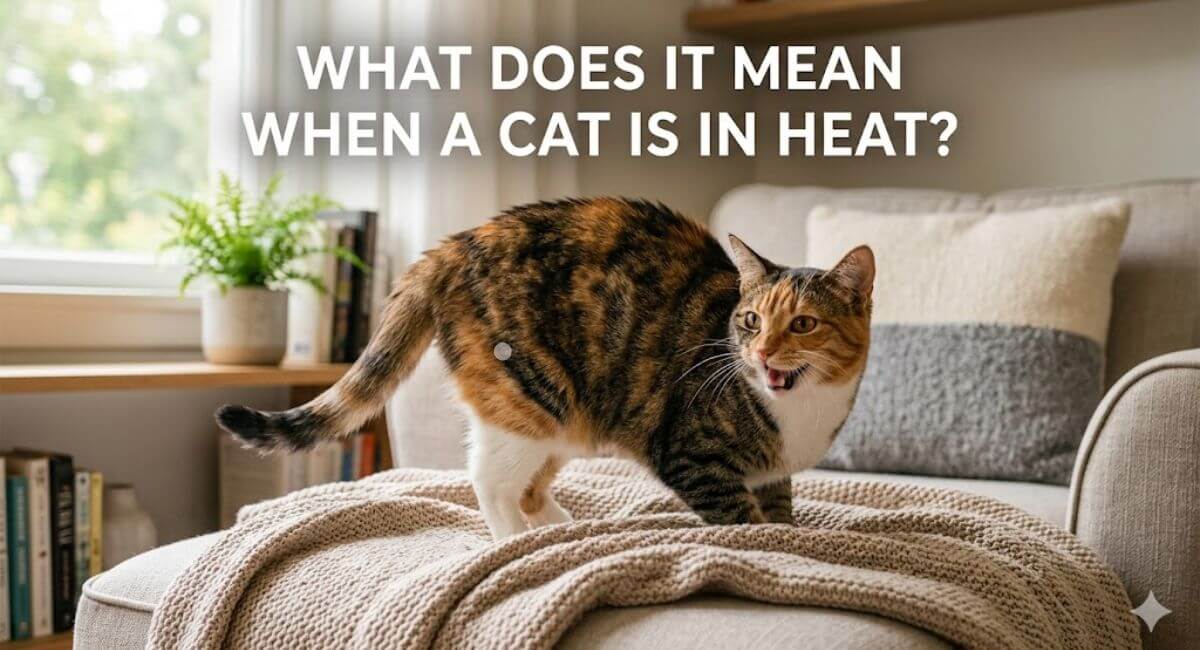

If you have an unspayed female cat suddenly acting extra vocal, clingy, or restless, you may wonder what it means when a cat is in heat. The answer relates to the natural feline reproductive cycle known as the estrus cycle. During this phase, a female cat becomes fertile and ready to mate.
Many cat owners notice unusual behavior changes during this time. Loud yowling at night, rubbing against furniture, tail lifting, and escape attempts are all common signs of a cat in heat. While the behavior may seem alarming at first, it is usually a normal hormonal response.
Understanding the heat cycle in cats helps you care for your pet properly, prevent unwanted pregnancy, and recognize when veterinary care is necessary. This guide explains the feline heat cycle, symptoms, stages, timing, and the best ways to keep your cat comfortable.
What Does It Mean When a Cat Is in Heat?
A cat in heat means a female cat is going through her fertile reproductive period. This stage is called estrus or the feline heat cycle. During estrus, reproductive hormones trigger behavioral and physical changes that attract male cats.
Unlike humans, cats are considered seasonal polyestrous breeders. That means they can go into heat multiple times throughout the breeding season, especially during warmer months with longer daylight hours.
A female cat in heat is often called a queen cat. If she mates during this fertile window, pregnancy can occur quickly. Cats are also known as induced ovulators, which means ovulation usually happens after mating.
Indoor cats can still experience the cat reproductive cycle even without contact with male cats. Artificial lighting inside homes may also influence reproductive timing.
When Do Cats Start Going Into Heat?
Most female cats begin their first heat cycle between 4 and 10 months of age. The exact timing depends on several factors:
- Breed
- Body weight
- Seasonal daylight exposure
- Overall health
- Genetics
Some breeds mature earlier than others. Siamese cats, for example, may enter their first estrus cycle sooner than larger breeds.
The first heat cycle often surprises owners because the cat may still look like a kitten. Even during the first heat, pregnancy is possible.
Can a Cat Get Pregnant During First Heat?
Yes. A cat can become pregnant during her first estrus cycle. That is why veterinarians often recommend spaying a cat before sexual maturity.
Signs of a Cat in Heat
Many owners first recognize the symptoms through sudden behavioral changes. The signs of a cat in heat are usually easy to spot once you know what to watch for.
Excessive Vocalizing and Yowling
One of the most common symptoms of estrus in cats is loud vocalization. Your cat may:
- Meow constantly
- Yowl during the night
- Cry loudly near doors or windows
This calling behavior is designed to attract male cats.
Increased Affectionate Behavior
Cats in season often become unusually affectionate. You may notice your cat:
- Rubbing on furniture
- Rolling on the floor
- Following you constantly
- Seeking more physical attention
These hormonal behavior changes are completely normal.
Tail Positioning and Mating Posture
A female cat in heat may raise her hindquarters and move her tail to one side when touched near the back. This mating posture signals readiness for breeding.
Restlessness and Escape Attempts
Many cats become restless during the active heat phase. Some pace around the home or try escaping outdoors to find male cats.
If your cat suddenly scratches doors or attempts to run outside, the heat cycle may be the cause.
Urine Spraying
Some cats spray urine during estrus. The scent contains pheromones that attract male cats.
Cat Heat Cycle Stages
Understanding the cat heat cycle stages makes feline reproductive behavior easier to manage.
Proestrus
This early stage lasts about 1 to 2 days. Mild affectionate behavior may appear, but the cat usually does not accept mating yet.
Estrus
This is the active heat phase where fertility peaks.
Common signs include:
- Loud yowling
- Tail lifting posture
- Rolling behavior
- Excessive affection
- Male cat attraction
This phase typically lasts several days.
Interestrus
If pregnancy does not occur, the cat enters a short resting stage before cycling again.
Metestrus
This stage occurs after ovulation and hormonal activity begins to decrease.
Anestrus
Anestrus is the inactive reproductive period that usually occurs outside the breeding season.
Allistic Meaning Explained Simply in Modern Neurodiversity Terms
How Long Are Cats in Heat?
Many owners ask how long does cat heat last. In most cases, the estrus phase lasts between 4 and 10 days.
The duration depends on:
- Whether mating occurs
- Age
- Breed
- Seasonal conditions
- Hormonal activity
If the cat does not mate, the cycle may repeat frequently.
How Often Cats Go Into Heat
Cats may go into heat every 2 to 3 weeks during breeding season. Because cats are seasonal breeders, cycling becomes more common in spring and summer when daylight increases.
Indoor cats may cycle year round due to artificial lighting.
Do Cats Bleed During Heat?
A common misconception is that female cats bleed like dogs during heat. In reality, most cats do not experience noticeable bleeding.
Small amounts of discharge may occasionally occur, but obvious bleeding is not normal.
When Bleeding May Signal a Problem
Seek veterinary care if you notice:
- Heavy bleeding
- Thick discharge
- Foul odor
- Lethargy
- Loss of appetite
These signs could indicate serious reproductive issues such as:
- Pyometra
- Uterine infection
- Reproductive disease
Cat Behavior Changes During Heat
The feline reproductive system affects both physical and emotional behavior.
Why Is My Cat Yowling Constantly?
Yowling is part of the natural mating process. Cats vocalize loudly to attract nearby males.
Why Is My Cat Trying to Escape the House?
Hormonal instincts drive many cats to search for mates outdoors. Even indoor cats may suddenly become determined escape artists.
Why Cats Become Clingy During Heat
Reproductive hormones can increase affectionate behavior. Some cats become extremely attached to owners during estrus.
How to Care for an Indoor Cat in Heat
Caring for a cat in heat requires patience and a calm environment.
Keep Your Cat Indoors
Preventing cat pregnancy starts with indoor confinement. Never allow an unspayed cat outside during estrus.
Provide Comfort and Distractions
Helpful comfort strategies include:
- Interactive toys
- Soft blankets
- Quiet resting spaces
- Extra playtime
- Clean litter box access
Distraction often reduces pacing and stress.
Avoid Male Cats
Even brief contact with intact male cats can lead to pregnancy.
How to Calm a Cat in Heat Naturally
Natural calming methods include:
- Gentle petting
- Warm bedding
- Consistent routines
- Play sessions
- Reduced noise levels
Preventing Unwanted Cat Pregnancy
The most effective solution for fertility management is spaying.
Spaying a Cat
Spay surgery, also called ovariohysterectomy, removes the reproductive organs and permanently prevents pregnancy.
Benefits include:
- No future heat cycles
- Reduced yowling
- Lower risk of mammary cancer
- Prevention of ovarian cancer
- Elimination of uterine infections
Best Age to Spay a Cat
Most veterinarians recommend spaying before the first heat cycle, often around 4 to 6 months of age.
Should You Spay a Cat While in Heat?
Some veterinarians perform surgery during heat, though blood flow may increase surgical complexity. Your vet can determine the safest timing.
Health Risks Associated With Repeated Heat Cycles
Repeated estrous cycles without pregnancy or spaying may increase health risks over time.
Pyometra
Pyometra is a dangerous uterine infection that can become life threatening.
Symptoms of pyometra in cats include:
- Swollen abdomen
- Vaginal discharge
- Fever
- Weakness
- Vomiting
Emergency veterinary examination is necessary.
Pseudopregnancy
Also called phantom pregnancy, this condition causes cats to show pregnancy-like behavior without actually being pregnant.
Mammary Tumors
Unspayed cats face a higher risk of mammary tumors, especially later in life.
When to See a Vet
Contact a veterinarian if your cat experiences:
- Abnormal bleeding
- Persistent lethargy
- Refusal to eat
- Severe discomfort
- Fever
- Foul-smelling discharge
- Signs lasting unusually long
Professional veterinary care helps rule out reproductive complications and uterine disease.
Frequently Asked Questions
How to tell if a cat is in heat?
Common signs include loud meowing, tail lifting, rolling on the floor, increased affection, pacing, and escape attempts.
How many days does estrus last in cats?
The active estrus phase usually lasts 4 to 10 days, though timing varies between cats.
Can indoor cats go into heat?
Yes. Indoor cats still experience the feline heat cycle even without outdoor exposure.
Do female cats bleed when in season?
Most cats do not bleed during heat. Heavy bleeding should be checked by a veterinarian.
How often do cats cycle?
Cats may go into heat every 2 to 3 weeks during breeding season if they do not become pregnant.
Can male cats detect a female cat in heat?
Yes. Male cats can smell hormonal pheromones from long distances and may gather near your home.
Final Thoughts
Understanding what it means when a cat is in heat helps you respond calmly and responsibly. The feline heat cycle is a natural reproductive process that causes noticeable behavior changes, including yowling, restlessness, and increased affection. While these symptoms can feel overwhelming, they are usually temporary and manageable with proper care.
If you want to prevent repeated heat cycles and unwanted litters, spaying remains the safest long term solution. It also protects your cat from serious reproductive health problems later in life. With the right care, attention, and veterinary guidance, you can keep your cat healthy, comfortable, and stress free throughout every stage of her reproductive cycle.