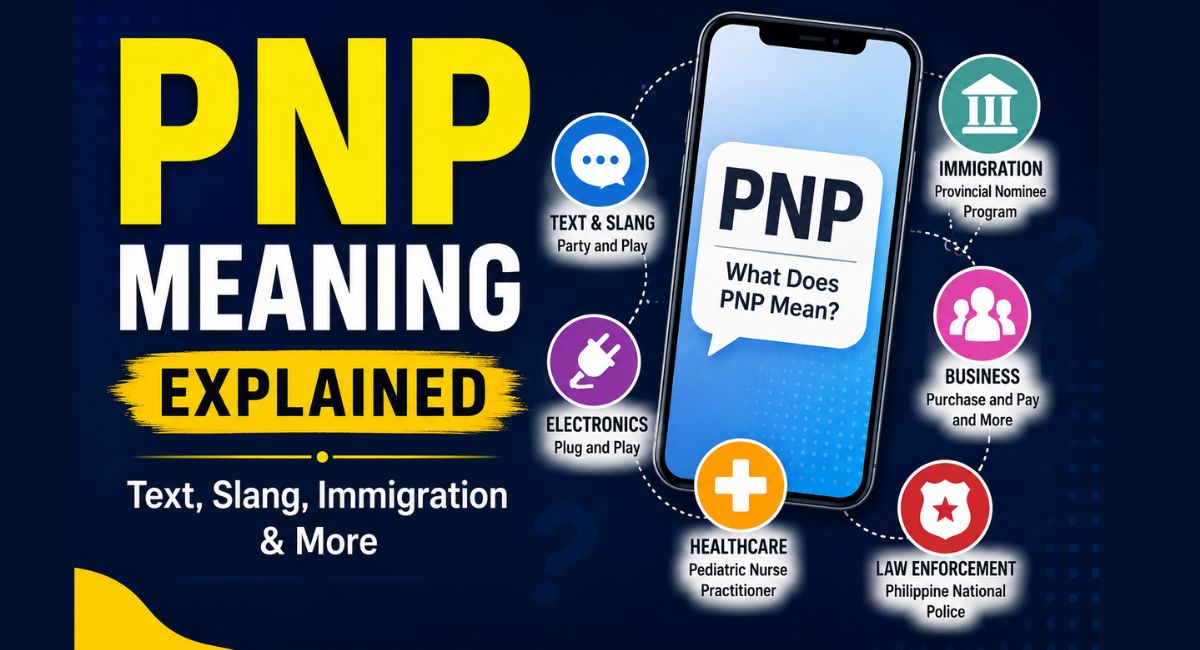

If you have spent any time on dating apps Grindr, Scruff, or similar platforms you have almost certainly come across the acronym PNP. Maybe someone asked “Are you into PNP?” or you spotted a profile that simply said “No PNP.” It is a piece of coded language that carries a lot of weight, and understanding what it means goes far beyond decoding two letters.
This article explains the full PNP meaning, explores what happens in these encounters, looks honestly at the drugs involved and their health consequences, and covers what support actually looks like for people who want it. There is no judgment here, only information.
What Does PNP Mean?
PNP stands for “Party and Play.” The “party” part is slang for using drugs, and the “play” is slang for sex. Put them together and PNP refers to combining recreational drug use with sexual activity essentially, drug-fueled sexual encounters. The term is also sometimes written as “parTy and pLay,” with capital letters deliberately highlighting the T (for Tina, street slang for crystal methamphetamine) and the L (for lube, referencing anal sex practices).
It gained traction largely within gay and bisexual men’s communities but is by no means limited to any single group. The behavior, and the language around it, has spread across hookup culture more broadly.
“PNP is not simply a lifestyle choice — it is a practice with complex motivations rooted in community, escapism, pleasure-seeking, and sometimes trauma.”
Where Did the Term Come From?
The origins of PNP slang are difficult to pin to a single moment, but the term gained widespread recognition alongside the rise of smartphone dating apps in the early 2010s. Platforms like Grindr made it easy for users to signal preferences quickly, and coded shorthand became currency. “PNP” allowed people to communicate a very specific interest without spelling it out plainly as a layer of protection from both social judgment and platform moderation.
Before that era, similar practices existed under the broader term chemsex, which was already gaining clinical attention in public health circles across the United Kingdom and Europe.
What Does RS Mean in Text Messaging? Full Slang Guide for 2026
Party and Play vs. Chemsex: Is There a Difference?
The two terms overlap significantly but are not always used interchangeably. Chemsex is the more clinically recognized term, used heavily in public health literature, particularly in the UK. It refers specifically to the use of certain psychoactive substances, almost always methamphetamine, mephedrone, or GHB/GBL to facilitate or enhance sexual experiences, typically between men who have sex with men (MSM).
PNP is the North American equivalent and tends to be used more casually. It is not always limited to the same specific drug set, cocaine, MDMA, and ketamine also appear regularly in PNP contexts. Both terms describe what researchers call sexualized drug use (SDU): the intentional combining of substances with sexual activity for the purpose of enhancing, prolonging, or lowering inhibitions around sex.
Key Distinction:
Chemsex is primarily a clinical and public health term most common in UK and European contexts. PNP is the American slang equivalent with slightly broader drug usage. In practice, both refer to the same core behavior — using drugs during sex intentionally.
Drugs Commonly Used During PNP
Not every drug shows up equally in PNP encounters. Some are used specifically because of the way they interact with sexual arousal, inhibition, and endurance. Here is a clear breakdown of the substances most frequently involved.
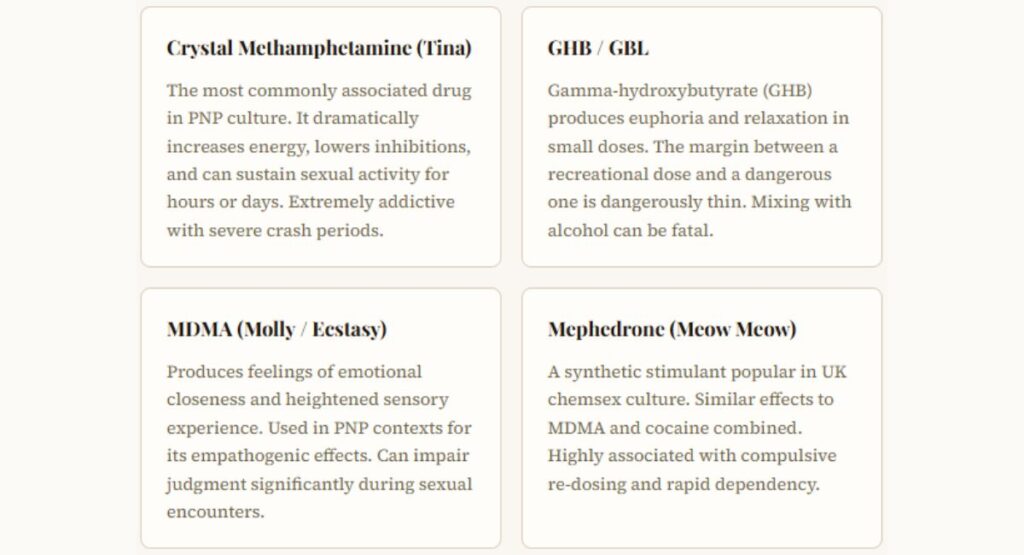
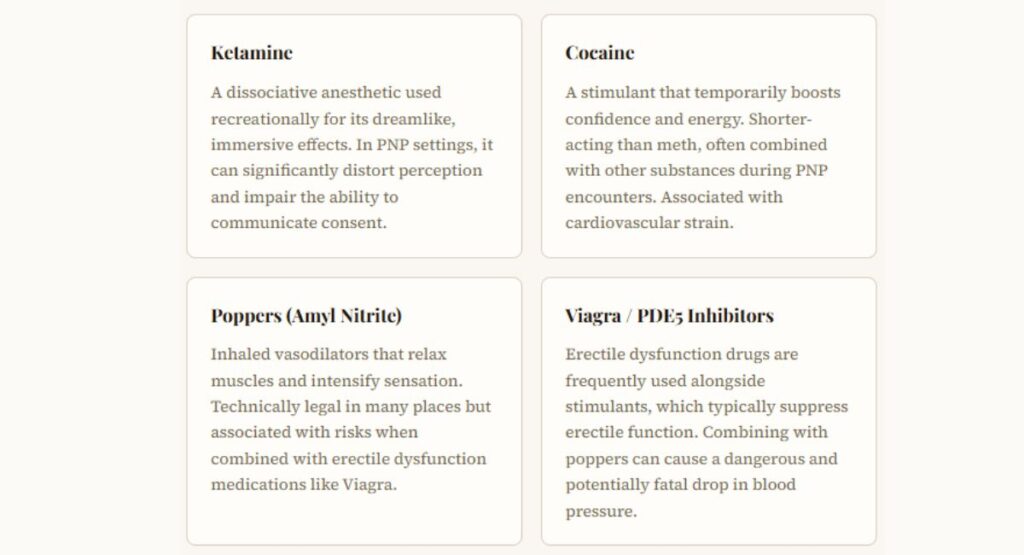
Critical warning: Combining GHB with alcohol or other depressants can quickly result in respiratory failure. Combining poppers (amyl nitrite) with sildenafil (Viagra) or similar medications can cause a life-threatening drop in blood pressure. These are not theoretical risks — they cause deaths every year.
Health Risks: Physical and Mental
Discussing PNP honestly means confronting a wide range of health consequences. These are not hypothetical. Research on chemsex and sexualized drug use consistently links the practice to elevated rates of several serious conditions.
Physical Health Risks
The most heavily documented physical risk in PNP contexts is HIV transmission. Studies show that gay and bisexual men who engage in chemsex are significantly more likely to have multiple sexual partners during a single session, more likely to engage in condomless sex, and more likely to have trauma-related injuries that increase transmission routes. This creates a compounding risk profile that public health professionals treat as a genuine crisis.
Beyond HIV, other sexually transmitted infections (STIs) including gonorrhea, syphilis, chlamydia, and hepatitis C — are far more common among regular PNP participants than in the general population. Hepatitis C in particular spreads efficiently through the minor blood exposure that can occur during rough or prolonged sexual activity, which is common in meth-fueled sessions.
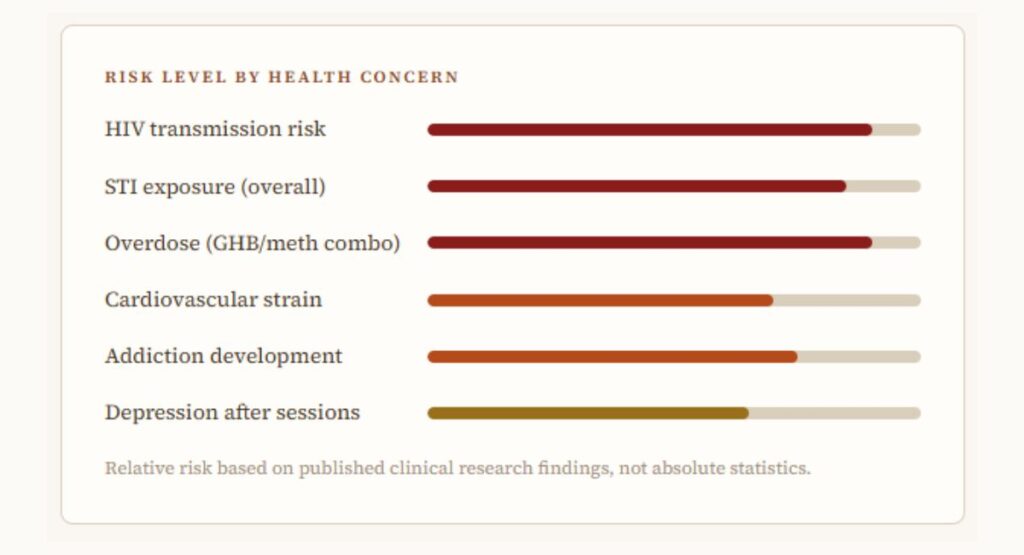
Methamphetamine use carries its own serious catalog of physical damage. Chronic use causes severe cardiovascular strain — irregular heartbeat, elevated blood pressure, and increased risk of heart attack and stroke. Dental deterioration (“meth mouth”), significant weight loss, skin sores from compulsive picking, and immune system suppression are all well-documented consequences of long-term meth use.
Mental Health and Psychological Impact
The psychological dimension of PNP is arguably where the longest-lasting damage often occurs. The euphoria and crash cycle of stimulant drugs is particularly brutal: the chemical high is followed by a crash characterized by deep depression, anhedonia (an inability to feel pleasure), anxiety, and in some cases, psychosis.
For many regular PNP participants, this crash period is not just unpleasant that becomes dangerous. The return to substance use is frequently driven not by desire for pleasure but by a desperate attempt to escape the depression of the comedown. This is the core of the dependency and addiction loop that traps many people.
Research also points to a significant overlap between PNP participation and existing trauma histories. Many people in PNP culture report that chemically enhanced intimacy initially filled a gap created by emotional isolation, shame around sexuality, or unprocessed trauma. What begins as a way to lower social anxiety and access intimacy can become a coping mechanism that deepens underlying psychological wounds rather than healing them.
The Shame and Silence Problem
One of the biggest barriers to seeking help is the guilt and shame that many PNP participants describe feeling — especially when they belong to communities already dealing with stigma. Fear of judgment from healthcare providers causes many people to avoid disclosing drug use during medical appointments, which delays HIV testing, STI treatment, and addiction support.
PNP Within the LGBTQ+ Community
PNP is not exclusively a gay phenomenon, but it has deep roots in gay, bisexual, and queer men’s communities often abbreviated in research as GBMSM (gay, bisexual, and other men who have sex with men). Understanding why requires looking honestly at the social context.
Why Chemsex Culture Took Hold
Several overlapping factors help explain why chemsex and PNP culture became so significant specifically within LGBTQ+ communities, particularly among gay and bisexual men.
First, historical stigma and discrimination. Decades of criminalization, religious condemnation, and social rejection created conditions where many gay and bisexual men internalized shame around their sexuality. Substances that chemically dissolve that shame lowering inhibitions and producing euphoria became tools for accessing intimacy that felt impossible while sober.
Second, social isolation. Queer people in many communities still experience profound loneliness, particularly in places where open LGBTQ+ social life is limited. PNP encounters often provide not just sex but also a sense of belonging — a temporary community. The drugs amplify feelings of connection and reduce the social anxiety that makes genuine intimacy difficult.
Third, the dating app infrastructure that emerged in the 2010s made PNP encounters significantly easier to arrange than previous generations of gay social life would have allowed. Apps created anonymous, efficient channels for finding partners who shared specific interests including substance-facilitated sex.
LGBTQ+ Substance Use Disparities
Research consistently shows that LGBTQ+ people experience higher rates of substance use disorders than the general population. This is not a character failing, it is a documented health disparity rooted in minority stress: the chronic, compounding stress produced by stigma, discrimination, and social marginalization. People under prolonged stress are significantly more vulnerable to using substances as a coping strategy.
For gay and bisexual men specifically, chemsex intersects with this broader pattern in ways that public health professionals and addiction specialists are still working to fully understand and address.
PNP on Dating Apps: The Language and the Culture
If you have ever opened Grindr and wondered what certain abbreviations mean, you are not alone. Dating app culture has developed a rich and often opaque vocabulary around PNP that functions as both a signal and a filter.
Common Coded Phrases
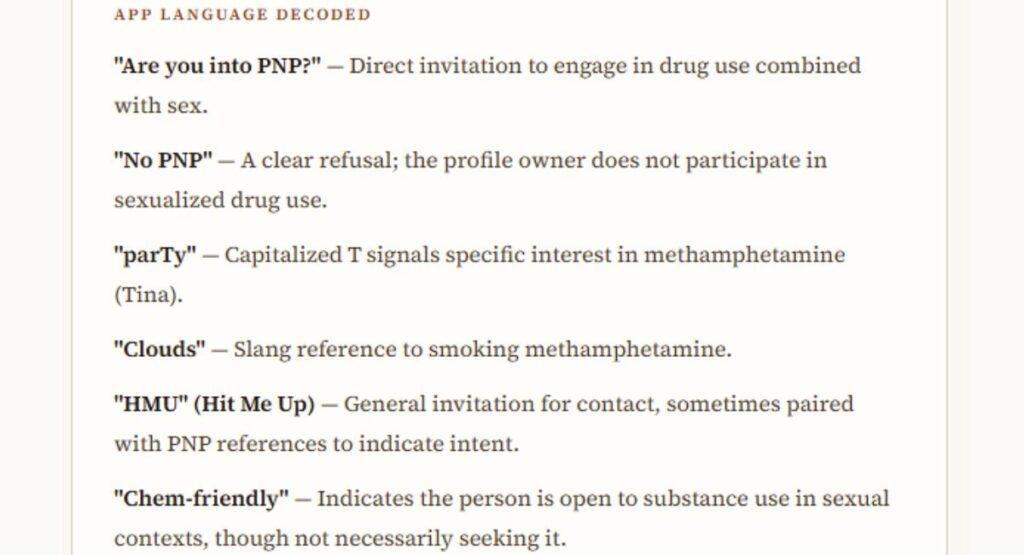
The reason for this coded language on Grindr and similar platforms is partly practical; many apps prohibit explicit drug-solicitation language in their terms of service, so users developed a vocabulary that communicates clearly within the community while remaining opaque to casual observers or platform moderators.
The Role of Apps in Facilitating Access
Dating apps lowered the barriers to PNP encounters considerably. Before smartphone apps, meeting strangers for drug-facilitated sex required significantly more social capital and navigation. Apps reduced that friction to a few taps on a screen, which meant that people who might previously have had only occasional exposure to PNP culture gained easy, repeated access to it.
Research has connected this increased accessibility to rising rates of chemsex-related health problems in urban centers, particularly in cities with large LGBTQ+ populations.
Harm Reduction: Safer Choices for Those Who Engage
Harm reduction is a public health philosophy that starts from a realistic premise: some people will use drugs regardless of what they are told. Rather than demanding abstinence, harm reduction focuses on minimizing the damage that drug use causes. Applied to PNP, it looks like this.
Harm Reduction Strategies for PNP
Never mix GHB with alcohol — The combination can cause respiratory arrest rapidly, even with small amounts of each.
Use PrEP — Pre-exposure prophylaxis is a highly effective once-daily medication that dramatically reduces HIV transmission risk. It does not require using condoms to be effective.
Test regularly — HIV and STI testing every 3 months is recommended for anyone with multiple partners. Many community health centers offer free or low-cost testing.
Never use alone — Overdose risk, particularly with GHB and meth combinations, is significantly higher when no one is present who can call for help.
Know the dose — GHB in particular has an extremely narrow therapeutic window. The difference between a recreational dose and an overdose can be less than 1ml.
Carry naloxone — If opioids are present in the substance mix (a growing risk with fentanyl contamination in drug supplies), naloxone can reverse overdose rapidly.
Harm reduction does not endorse PNP or encourage it. What it does is acknowledge that people engage in these behaviors, and that providing practical safety information saves lives. This is well-supported by decades of public health research.
When It Becomes a Problem: Finding Support
PNP does not always lead to addiction but for a significant number of people, it does. Recognizing the warning signs early makes an enormous difference in the trajectory of recovery.
Warning Signs to Watch For
You may be developing a substance use disorder related to PNP if you find yourself thinking about the next encounter primarily in terms of accessing the drugs rather than the sexual connection itself. Other warning signs include an inability to have sex without substances, continuing to engage in PNP despite clear negative consequences (health problems, relationship damage, work impact), or experiencing intense anxiety and depression in the days following a session.
The progression from recreational use to dependency is often gradual. Many people describe not realizing how dependent they had become until they tried to stop and found themselves unable to.
Treatment Options That Actually Work
Effective treatment for PNP-related substance use disorders typically involves a few key components working together. Cognitive behavioral therapy (CBT) is well-supported for both methamphetamine and stimulant addiction — it helps people identify the thought patterns and emotional triggers that drive substance use. Trauma-informed care is essential for many PNP participants, given the frequency with which unprocessed trauma underlies the behavior.
LGBTQ+-affirming treatment centers are particularly important for gay and bisexual men in PNP culture. Research clearly shows that patients who receive care from providers who understand and affirm their identity have significantly better treatment outcomes than those who receive generic care or worse, care that pathologizes their sexuality alongside their substance use.
Outpatient rehab programs are often the most practical option, particularly for people who cannot step away from work or family obligations for inpatient treatment. Intensive outpatient programs (IOPs) typically involve several hours of treatment per week while allowing participants to maintain daily life.
Recovery support groups specifically designed for LGBTQ+ individuals with substance use disorders exist in many major cities and online. These communities offer the social connection that PNP sometimes temporarily provided but without the dependency, risk, and aftermath.
A Note on Seeking Help
If you are concerned about your own or someone else’s relationship with PNP, starting with a non-judgmental sexual health clinic or community health center is often the most accessible first step. You do not have to be at a crisis point to benefit from support. Many services are free, confidential, and staffed by providers experienced with LGBTQ+ health issues.
Frequently Asked Questions
What does “No PNP” mean on Grindr or other dating apps?
When someone writes “No PNP” on a dating app profile, they are clearly stating that they do not participate in sexualized drug use and do not want to be approached by people who are looking for that. It functions as a filter, a direct signal to skip their profile if you are seeking drug-facilitated sex. It does not say anything about the person’s views on others who do engage in PNP; it is simply a statement of their own preferences and limits.
Is PNP the same as chemsex?
They describe the same core practice combining drug use with sexual activity but they come from different cultural and geographic contexts. Chemsex is primarily a clinical and public health term, most commonly used in the United Kingdom and Europe, and it tends to refer specifically to three drugs: methamphetamine, mephedrone, and GHB or GBL. PNP is the American slang term and is used more broadly, sometimes including cocaine, MDMA, ketamine, and other substances. In everyday conversation and in research literature, the two terms are often used interchangeably.
What are the biggest health risks of PNP?
The most significant risks include elevated HIV and STI transmission due to condomless sex with multiple partners, overdose from GHB or drug combinations, cardiovascular damage from methamphetamine use, and the development of substance use disorders. Psychological risks are equally serious: depression, anxiety, and psychosis can follow heavy sessions, and many regular PNP participants eventually develop a dependency cycle that is difficult to break without professional support. The risks increase significantly when multiple substances are combined — particularly GHB with alcohol or poppers with erectile dysfunction medications.
Can someone become addicted from occasional PNP participation?
Yes, though addiction does not happen on a fixed timeline and varies significantly between individuals. Methamphetamine in particular has a high addiction potential the neurological changes it produces can begin after relatively few uses. GHB and mephedrone also carry significant dependency risks. What makes PNP-related addiction especially insidious is that the drug use is paired with a highly rewarding activity (sex), which means the brain forms an especially powerful association between the two. Many people find, over time, that they can no longer access sexual arousal without the substances, which is itself a sign of dependency.
Where can someone find LGBTQ+-affirming addiction treatment?
LGBTQ+-affirming treatment is increasingly available both in-person and online. Many community health centers in urban areas specifically serve LGBTQ+ populations and offer substance use counseling alongside sexual health services. The Substance Abuse and Mental Health Services Administration (SAMHSA) maintains a treatment locator at findtreatment.gov where you can filter for providers serving LGBTQ+ individuals. Online recovery communities, including those specifically for gay and bisexual men, offer peer support that complements professional treatment. If you are unsure where to start, a sexual health clinic that deals with chemsex-related concerns is often the most practical and least stigmatizing first point of contact.
Does taking PrEP remove the need to worry about HIV during PNP?
PrEP (pre-exposure prophylaxis) dramatically reduces the risk of acquiring HIV — studies show it is about 99% effective when taken daily as prescribed. That is genuinely excellent protection. However, PrEP does not protect against other STIs, including gonorrhea, syphilis, chlamydia, or hepatitis C. It also does nothing to reduce the risks associated with drug use itself overdose, cardiovascular damage, and addiction remain serious concerns regardless of HIV prevention. PrEP is an important tool, but it works best as part of a broader approach to sexual health that includes regular testing, open communication with partners, and honest engagement with substance use patterns.
Final Thoughts
PNP is a real and complex phenomenon, not a fringe curiosity, but a practice woven into the social fabric of hookup culture, particularly within LGBTQ+ communities. Understanding what PNP means is the first step, but the more important step is understanding why it exists: the loneliness, the stigma, the desire for connection, and the very human search for experiences that feel extraordinary. None of those motivations are shameful. The risks, however, are real, and ignoring them helps no one.
Whether you are exploring this topic out of curiosity, concern for someone you care about, or a desire to understand your own experiences more clearly, knowledge is the most powerful harm reduction tool available. Support exists, stigma-free care exists, and recovery is genuinely possible. The path forward looks different for everyone but it starts with honest information.