
In everyday texting, short replies are everywhere, and “mhm” is one of the most common ones people use without thinking much about it. You might see it in chats with friends, coworkers, or even in online conversations, and its meaning can shift depending on tone and situation.
The mhm meaning in text is usually simple, but the feeling behind it is not always clear. Sometimes it shows agreement, while other times it feels distant or uninterested. Learning how to read these small signals can help you understand texting behavior, avoid confusion, and respond better in digital conversations.
What Does Mean in Text?
Mhm meaning in text is simple:
- Meaning: “Yes,” “uh-huh,” or “I agree”
- Use: Quick, informal reply
- Purpose: Acknowledgment or agreement
- Tone: Friendly, neutral, or dismissive
- Effort Level: Low-effort response
It’s what linguists call a non-lexical vocalization, similar to how people nod during real-life conversations. In texting, it replaces a verbal nod or short confirmation.
How “Mhm” Is Used in Texting Conversations
1. Agreement in Casual Chats
The most common use of mhm in texting is simple agreement.
Example (USA context):
Friend: “We’re meeting at 7 PM, right?”
You: “Mhm”
Here, it works just like saying “yes” without extra effort.
2. Acknowledging Without Adding More
Sometimes, people use mhm meaning in chat to show they’re listening but don’t want to continue the conversation deeply.
Example:
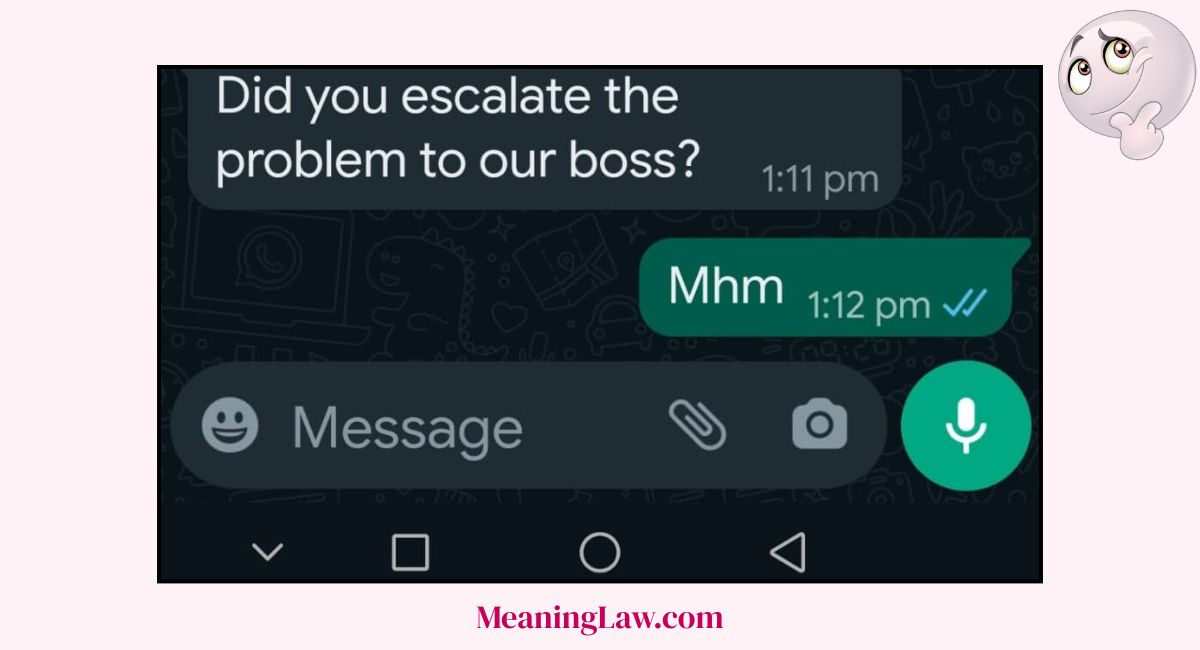
Coworker: “I’ll send the report later today.”
You: “Mhm”
This is common in workplace chat behavior across the U.S., especially on tools like Slack or Teams.
3. Passive or Low-Energy Response
In modern texting habits, “mhm” can signal minimal effort.
- It may mean the person is busy
- Or they don’t feel like talking much
This falls under short replies in chat and casual communication patterns.
4. Slightly Dismissive or Cold Tone
Tone matters a lot in texting behavior.
Example:
Partner: “Did you even listen to me?”
Reply: “Mhm.”
The period makes it feel cold or uninterested. This is where tone in texting becomes important.
5. Sarcastic or Playful Usage
Sometimes, “mhm” carries sarcasm depending on context.
Example:
Friend: “I totally didn’t eat your fries.”
You: “Mhm”
Here, it suggests disbelief.
Tone Variations of “Mhm” in Messages
The way “mhm” is written changes its emotional meaning:
- Mhm! → Positive, friendly, engaged
- → Neutral acknowledgment
- Mhm. → Cold or slightly annoyed
- Mmhmm → Can be sarcastic or exaggerated
This highlights how the emotional meaning of words plays a big role in online conversations.
Is “Mhm” Rude or Polite in Texting?
This is one of the most searched questions around mhm meaning in text messages.
It depends on context:
Polite when:
- Used in quick confirmations
- Casual chats with friends
- Busy situations
Rude when:
- Used during serious conversations
- Replaces thoughtful responses
- Comes off as dismissive
In American communication style, tone and effort matter. A simple “mhm” can feel too minimal in emotional or important discussions.
vs Other Texting Responses
Understanding the mhm vs yeah difference in texting helps avoid confusion.
| Expression | Meaning | Tone |
| Mhm | Yes / acknowledgment | Neutral or passive |
| Yeah | Yes | More engaged |
| Yep | Yes | Friendly |
| Ok | Agreement | Can feel neutral or cold |
| K | Agreement | Often seen as dismissive |
“Mhm” sits somewhere between “yeah” and “ok” in terms of engagement.
Real-Life Scenarios in the USA
1. Workplace Messaging
In U.S. offices, mhm in digital communication is common in quick replies.
Example:
Manager: “Join the Zoom at 3.”
Employee: “Mhm”
Efficient but slightly informal.
2. Relationships & Dating
In mhm meaning in relationships texting, tone matters even more.
Example:
Person A: “I miss you.”
Person B: “Mhm”
This can feel emotionally distant or uninterested.
3. Social Media & DMs
On platforms like Instagram or Snapchat, mhm meaning in social media often signals:
- Quick acknowledgment
- Low engagement
- Or subtle disinterest
Why Do People Use “Mhm” in Chat?
Here are the main reasons:
- Convenience – Faster than typing full sentences
- Habit – Mirrors real-life speech patterns
- Low effort – Keeps conversation going without energy
- Neutral tone – Avoids strong emotions
- Passive agreement – Acknowledges without commitment
This reflects human communication patterns and the shift toward short-form communication.
When Should You Use “Mhm”?
Best Situations:
- Casual conversations
- Quick confirmations
- When multitasking
- Informal chats with friends
Avoid Using It:
- Serious discussions
- Emotional conversations
- Professional emails
- Conflict situations
Understanding how to use mhm in text messages can improve your digital communication skills.
How to Respond to “Mhm” in Text
If someone replies with “mhm,” here’s how to handle it:
- Ask a follow-up question → Keeps conversation alive
- Add more context → Encourages engagement
- Mirror their tone → Stay consistent
- Clarify if needed → Avoid misunderstanding
Example:
Them: “Mhm”
You: “Got it, do you agree or want to change anything?”
This reduces misunderstanding in text.
The Origin of “Mhm”
“Mhm” has been used since the 1930s as a spoken expression meaning “yes” with a closed mouth.
It’s part of spoken vs written language evolution, now adapted into internet slang terms and modern language trends.
FAQ: Mhm Meaning in Text
What does mhm mean in text messages?
meaning in text usually means “yes,” “uh-huh,” or agreement. It shows acknowledgment but often with low effort.
Is mhm rude in texting?
It can be. In casual chats, it’s fine. In serious conversations, it may seem dismissive or uninterested.
What does mhm mean from a girl or guy?
There’s no gender difference. The meaning depends on tone, context, and relationship dynamics.
How do I respond to mhm in chat?
Ask a follow-up question or add more detail to keep the conversation going.
What is the difference between mhm and yeah?
“Mhm” feels more passive, while “yeah” sounds more engaged and friendly.
Conclusion
Understanding meaning in text goes beyond just “yes.” It’s a subtle signal shaped by tone, context, and intent. In online messaging language, even small replies carry emotional weight.
If you want clearer communication, don’t rely too much on “mhm” in important conversations. Use fuller responses when clarity matters, especially in relationships or professional settings.
Mastering these small details can improve how you read and respond in digital conversations, helping you avoid confusion and connect more effectively.