
If you have ever seen WYTB in a text or chat, it might have seemed confusing at first. It is a quick way to send positive vibes or good wishes to someone. People often use it in casual texting, social media comments, or even friendly emails to show support or encouragement.
WYTB is always polite and uplifting, making it a perfect choice for ending a conversation on a warm note unlike other abbreviations. Understanding this acronym can make your messages feel friendlier and more connected to the digital communication culture.
What Is WYTB in Text?
WYTB is an acronym used in digital communication, primarily texting, social media, or chat apps. It’s a quick shorthand to express goodwill toward someone. Unlike casual acronyms like LOL or BRB, WYTB is inherently positive and polite.
Key Points:
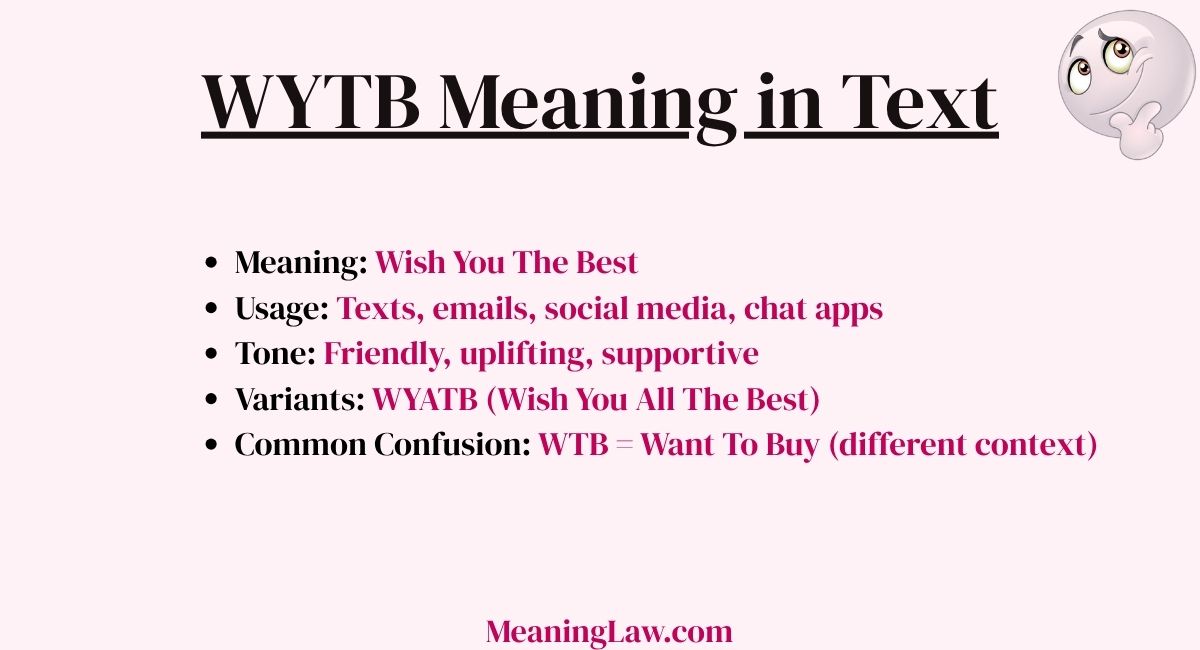
- Meaning: Wish You The Best
- Usage: Texts, emails, social media, chat apps
- Tone: Friendly, uplifting, supportive
- Variants: WYATB (Wish You All The Best)
- Common Confusion: WTB = Want To Buy (different context)
WYTB Meaning in Simple Words
In everyday terms, WYTB is like saying:
“I hope everything goes well for you”
“Sending positive vibes your way”
It’s often used as a sign-off at the end of a conversation, whether the chat is personal, professional, or casual. Unlike “LOL” or “OMG,” which are purely expressive, WYTB carries a direct message of goodwill.
Real-Life WYTB Scenarios in the USA
Understanding WYTB is easier when you see it in action. Here are common scenarios where Americans might use it:
1. Casual Friend Chats
Text Example:
Friend: “I just got my college acceptance letter!”
You: “Congrats! WYTB 😊”
Here, WYTB shows support and positivity without needing long messages.
2. Workplace or Professional Messaging
Email Example:
“Thanks for all your hard work on this project. WYTB in your next assignment!”
It’s polite and encouraging, especially for colleagues or team chats.
3. Social Media & Online Communities
Comment Example:
Instagram: “Saw your post about your new business launch—WYTB! 💼✨”
WYTB adds a friendly, authentic touch to social media interactions.
4. Dating Apps or Casual Conversations
Chat Example:
“It was fun chatting with you tonight! WYTB 😊”
It conveys goodwill while keeping the tone light and friendly.
WYTB vs Other Similar Acronyms
Sometimes, beginners confuse WYTB with other abbreviations. Here’s a quick comparison:
| Acronym | Meaning | Usage | Notes |
| WYTB | Wish You The Best | Texts, chats, emails | Positive sign-off |
| WYATB | Wish You All The Best | Formal or friendly | Slightly longer version |
| WTB | Want To Buy | E-commerce, chat | Different context, avoid confusion |
| WYM | What You Mean | Asking for clarification | Informal, casual |
| WYD | What You Doing | Chat, texting | Neutral, casual conversation |
5 Quick Tips for Using WYTB in Texts
- Use it as a closing line: Great for ending conversations on a positive note.
- Pair with emojis: Enhances friendliness and tone (e.g., 😊, ✨, 💼).
- Avoid in serious or formal messages: Stick to casual-professional or personal contexts.
- Don’t confuse it with WTB: Always ensure context is clear to prevent misunderstanding.
- Use in social media comments: Shows goodwill without writing a long message.
The Origin of WYTB
WYTB is part of a larger trend of digital slang that emerged with texting, instant messaging, and social media. While not tied to any one decade or cultural reference, it shares a friendly tone often found in early 2000s texting culture. Its positive, uplifting meaning makes it popular among Gen Z and Millennials in the USA.
Some suggest WYTB may have roots in African American Vernacular English (AAVE) texting styles, where friendly shorthand expressions became widely adopted in online communities.
WYTB in Digital Culture
In today’s online world, acronyms like WYTB are more than just shorthand; they reflect tone, intention, and digital literacy. Using WYTB correctly:
- Shows emotional awareness in messages
- Maintains a positive social presence
- Makes chats concise yet meaningful
It’s particularly useful in group chats, social media replies, and casual professional exchanges where space and attention are limited.
WYTB Examples Across Platforms
Text Messaging
Friend: “I didn’t get the promotion I applied for 😢”
You: “I’m sorry to hear that. WYTB 💪”
Facebook/Instagram Comments
“Saw your art post WYTB! Keep creating amazing work 🎨”
LinkedIn or Work Chats
“It’s been great collaborating on this project. WYTB in your next role!”
Gaming Chats
“Good luck in the tournament, WYTB! 🎮”
FAQs About WYTB
What does WYTB mean in texting?
WYTB stands for “Wish You The Best”. It’s a positive, friendly way to sign off a chat or message.
Can WYTB be used in professional emails?
Yes, but keep it casual-professional. Pair it with a polite sentence to avoid appearing too informal.
How is WYTB different from WTB?
WTB means “Want To Buy”, commonly used in online marketplaces. WYTB means “Wish You The Best”, which is a goodwill message. Context is key.
Is WYTB the same as WYATB?
Almost! WYATB stands for “Wish You All The Best” and is a slightly longer, more formal version of WYTB.
Can WYTB be misunderstood?
Rarely, if used in casual texting or social media. Just avoid confusing it with WTB or similar acronyms.
Conclusion
WYTB is a simple, friendly, and positive acronym that makes digital communication more personal and uplifting. Whether you’re texting friends, engaging on social media, or sending a casual professional email, WYTB adds warmth and goodwill.
To use it effectively, always end conversations positively, combine it with emojis to enhance friendliness, and avoid confusing it with similar acronyms like WTB.
By applying WYTB across texts, emails, and online messaging, you stay concise and meaningful. Understanding WYTB helps you decode digital slang and communicate confidently in the fast-paced world of informal conversations and online chats.